
News
Glenn Chadwick: Unraveling the Many Lives of a Name Etched in History


Introduction
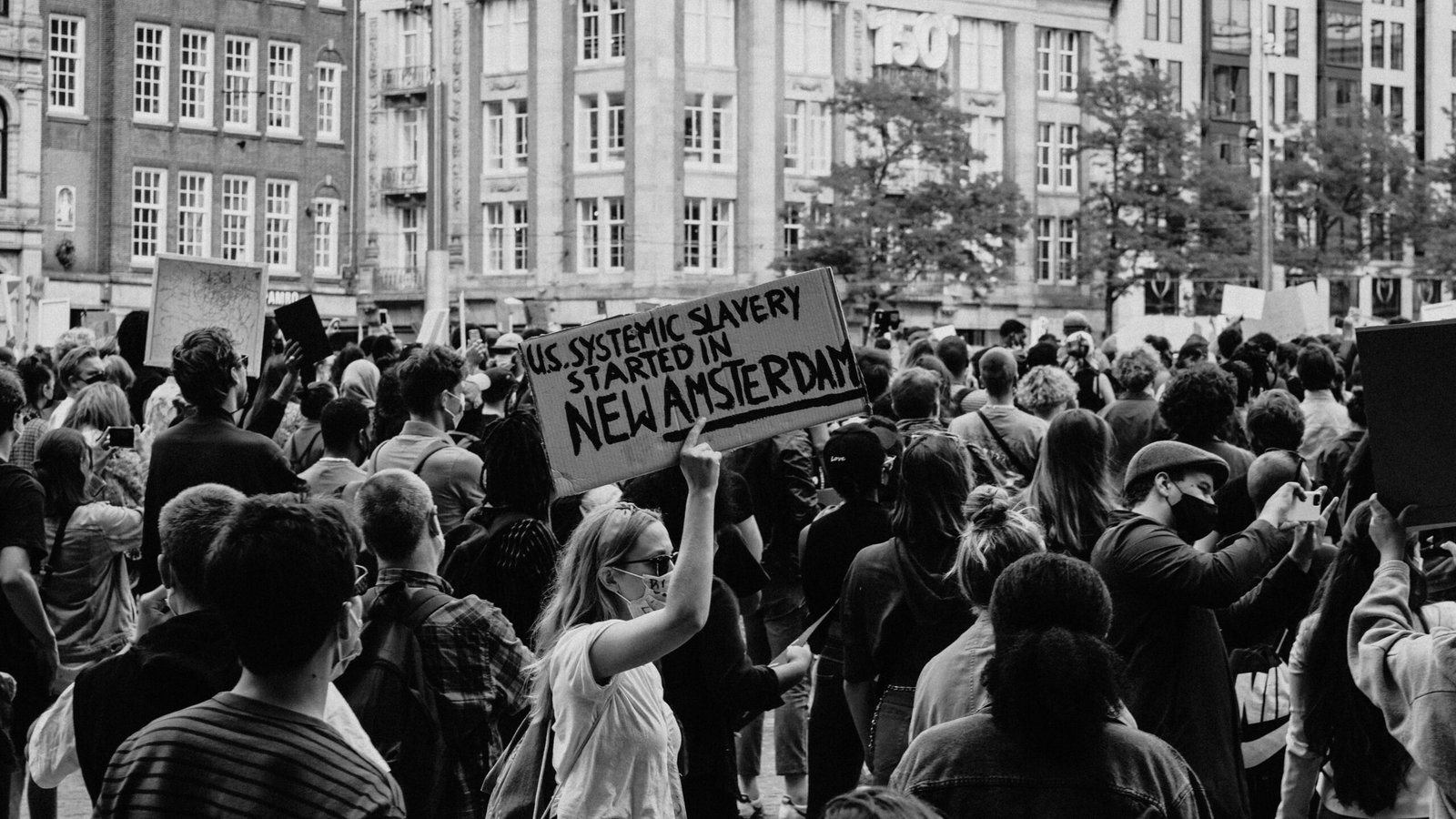
The terms “racist and racism” are often used interchangeably in everyday conversation, yet they represent two fundamentally different concepts. Understanding this distinction is not merely a matter of semantics—it is essential for meaningful dialogue and effective action against racial inequality. While “racist” typically refers to individual attitudes, behaviors, and beliefs, “racism” encompasses broader systems, institutions, and structures that produce and sustain unequal outcomes across racial lines . This comprehensive article explores these critical distinctions, the historical context of racism, how racism manifests in modern society—including in digital spaces—and what individuals and communities can do to become actively anti-racist.
Understanding the Core Distinction: Racist vs. Racism
What Defines a Racist Person?
A racist is an individual who expresses or acts on racial prejudice, bias, or discriminatory beliefs. This manifests through various behaviors: using racial slurs or offensive comments, making judgments based on stereotypes, treating someone unfairly because of their race, or holding beliefs that one race is inherently superior or inferior to others . The racist individual operates at the interpersonal level, where personal attitudes and actions cause direct harm.
However, it is important to recognize that individual racist acts often derive power from their connection to broader systems. As one analysis explains, “a racist person commits acts of racism independently of any system or as part of that system,” suggesting that individual behavior and systemic structures are frequently intertwined . A racist person uses their race-based power to mistreat others, believing in their own racial superiority and often disregarding facts that disprove their beliefs .
What Constitutes Racism?
Racism, by contrast, is fundamentally different from racial prejudice, hatred, or discrimination alone. Racism involves one group having the power to carry out systematic discrimination through institutional policies and practices, while simultaneously shaping cultural beliefs and values that support those racist policies . Racism is a race-based caste system that designates social status based on membership in a racial category, combining racist ideas with institutional power in ways that disadvantage some racial groups over others .
This distinction is crucial because it challenges the common misconception that racism simply equals “bad people doing bad things.” In reality, racism often operates through systems producing unequal outcomes even without obvious “bad people” being involved. Racism was created by individuals for particular reasons, but one does not have to be personally racist to benefit from racist systems. As experts point out, “you can remove a racist person and still be left with racism” because racism is embedded in systems that outlive individuals .
The Systemic Nature of Racism
Systemic racism represents an interlocking and reciprocal relationship between individual, institutional, and structural levels that function together as a whole system . These interconnected levels include interactions between people, practices within institutions and systems of power, and broader structural or societal patterns across society . This is why racism persists even when individual prejudice declines—the systems themselves maintain racial hierarchies.
The manifestation of systemic racism appears across multiple domains: disparities in housing, education, healthcare, and wealth; historical patterns that continue shaping present-day outcomes; and institutional practices that advantage some groups over others regardless of individual intent . Even well-intentioned individuals operating within racist systems can perpetuate harm without any conscious prejudice.
The Historical Foundations of Racism
The Social Construction of Race
Race is not a biological reality but a social construct—an idea created and widely accepted within society to reinforce power imbalances. Scientists from various fields agree there is no scientific evidence to subdivide people into racial categories . The term “race” itself was rarely used prior to the 1500s, and racial categories have proven arbitrary, malleable, and often contradictory, shifting to suit changing societal norms .
Race designations have changed over time—groups considered “White” in the United States today, such as Irish, Italian, and Jewish people, were once viewed as non-White in previous eras . This demonstrates that racial categories are not fixed but are instead products of specific historical and social contexts. Despite race being scientifically unfounded, it has lasting impacts because racial classifications often determine the benefits and privileges one receives in society, making racial groups operate similarly to a form of caste .
Scientific Racism and Its Legacy
The history of racism is intertwined with pseudoscientific theories that attempted to justify racial hierarchy. The “science” of race was historically used to support imperialism, genocide, and the systematic oppression of entire populations . These theories, though scientifically discredited, left lasting legacies that continue to shape institutional practices and cultural beliefs.
The demise of scientific racism did not eliminate racial discrimination; instead, racism adapted into new forms—cultural racism, color-blind racism, and more subtle manifestations that are harder to identify and challenge . Understanding this historical evolution is essential for recognizing how racism persists in contemporary society.
Racism in the Digital Age
Search Engines and Algorithmic Bias
The digital world, far from being a neutral space, often replicates and reinforces existing racial inequalities. Research has demonstrated that the internet appears segregated along racial lines, with websites focusing on racial issues visited less often and less visible in search result rankings than sites with different or broader focuses . Search engines and social media platforms mediate how users find and share information, often perpetuating racial biases in the process.
Studies have shown that nonracial sites rank significantly higher in search results and enjoy greater visibility than racial sites . This is not necessarily the result of intentional discrimination but rather reflects how technology developed within a culture that is systemically and structurally racist. Existing biases operate similarly online, making it “possible—even likely—that existing biases operate in similar ways online” .
The Language of Racism on Social Media
Social media platforms reveal how frequently discussions about Black people become entangled with racism. Analysis of Reddit posts and tweets containing the phrase “Black people” found that the most frequently associated terms were “white,” “police,” “racist,” and “racism” . Similarly, discussions about racism itself frequently included terms like “systemic,” “white,” “police,” and “America,” indicating that people primarily connect racism with systemic problems rather than merely individual prejudice .
The frequency with which these terms appear together suggests that public discourse increasingly recognizes racism as a structural issue—yet many individuals still struggle to distinguish between individual racist behavior and systemic racism. This linguistic confusion can obscure understanding of how racism actually functions.
The Power of Racialized Language
Words carry significant power to normalize racism and xenophobia. Research examining the language of far-right and nativist figures reveals recurring themes: migration framed as an existential threat through words like “invasion” and “flood,” the construction of “us versus them” binaries, and the use of seemingly innocuous words like “ordinary” to create false separations between migrants or people of color and so-called “ordinary Britons” .
The word “ordinary” itself has become racially loaded when used to imply that belonging requires being White, British, and Christian, thereby excluding people of color, Muslims, Jewish people, and those with migration backgrounds . This subtle and novel use of language demonstrates how racism evolves to maintain its power while appearing reasonable to those who benefit from it.
Individual Behavior and Systemic Racism
Distinguishing Prejudice from Racism
It is important to distinguish between racial prejudice and racism. While anyone can hold prejudiced views, racism requires power to carry out systematic discrimination through institutional policies and cultural practices. This is why scholars note that people of color, despite experiencing prejudice and discrimination, rarely possess the systemic power required to be true racists in the structural sense . They can be prejudiced, mean, or hateful, but they typically do not have access to the institutional power that defines systemic racism .
This distinction does not minimize the harm caused by individual acts of prejudice but rather contextualizes them within broader power structures. A racist person who is part of a racist system can cause harm that extends far beyond their individual actions, while a prejudiced person without systemic backing has significantly less capacity to shape society’s outcomes.
How Individuals Benefit from Racism
One does not have to be racist to benefit from racism. Individuals can benefit from systems that advantage them while consciously rejecting racist beliefs. This is why conversations about systemic racism can be so challenging—they ask people to recognize benefits they may not have sought and to acknowledge harm caused by systems they did not create.
The key takeaway is that racism is not just about people’s attitudes; it is about systems that outlive individuals. Addressing racism requires looking beyond individual behavior to examine how institutions operate, regardless of the intentions of the people within them.
Becoming Anti-Racist
The Active Work of Dismantling Racism
Anti-racism is defined as the work of actively opposing racism by advocating for changes in political, economic, and social life. An anti-racist is someone who supports anti-racist policies through their actions or expresses anti-racist ideas, including the belief that racial groups are equals and supporting policies that reduce racial inequity .
Unlike simply not being racist, which is a passive position, being anti-racist requires deliberate action. Racism is the byproduct of deliberate action and thus requires deliberate action to confront it. The work of the anti-racist is the work of a change agent who seeks to undo the impact of racism .
Individual and Collective Action
For individuals, becoming anti-racist involves educating oneself and others on issues concerning racism and its manifestations in historical and contemporary ways. It also means identifying and uprooting signs of racism in daily life, including bias, prejudice in personal life, family units, social networks, and communities . This is deeply personal work that requires ongoing reflection and learning.
For communities and institutions, anti-racism work involves identifying, denouncing, dismantling, and replacing racist policies, procedures, behaviors, and customs in collective spaces. It also means collectively advocating for public policy designed to undo the harm created by racism’s manifestation in society’s systems, structures, and institutions . Creating environments that foster equity and belonging for all people is the ultimate goal.
Understanding Multiple Forms of Racism
Racism today takes many forms, including cultural racism, Islamophobia, intersectionality, and color-blind racism . Understanding these various manifestations is essential for effective anti-racist work. The rise of right-wing national populism globally demonstrates that racism remains a potent political force that requires sustained resistance.
While centers focused on fighting racism primarily direct their attention to racial justice, they recognize that transformative change often involves coalition-building among marginalized groups . Addressing racism requires understanding how it intersects with other forms of oppression while maintaining focus on the unique systems and forms of oppression animated by racism.
Conclusion
Understanding the distinction between “racist and racism” is essential for meaningful action against racial inequality. Racism is not simply about individual bad behavior—it is a system of policies, practices, and cultural norms that create and maintain racial inequality across generations. A racist person is an individual who expresses or acts on racial prejudice, while racism is the structure that produces and sustains unequal outcomes regardless of individual intent .
This distinction matters because focusing exclusively on individual racism makes it easier to distance ourselves from the problem. It allows people to say, “I’m not a bad person, so this doesn’t involve me.” But racism does not rely on individual intent to continue existing. The systems that produce racial inequality persist whether individuals harbor prejudice or not .
The good news is that because racism is created by humans, it can be dismantled by humans. Becoming anti-racist requires deliberate, sustained effort—educating ourselves, challenging bias in our personal lives, advocating for equitable policies, and working collectively to transform institutions. It is not comfortable work, but it is necessary work. As one commentator put it, “The good thing is conversations like these. Let’s keep gnawing at the system. One racist at a time” .
Frequently Asked Questions
1. What is the difference between a racist and racism?
A racist is a person who expresses or acts on racial prejudice, bias, or discriminatory beliefs through individual behavior and attitudes. Racism is a system of policies, practices, and cultural norms that create and maintain racial inequality across society. Racism operates at institutional and structural levels regardless of individual intent .
2. Can someone be racist without meaning to be?
Yes. Because racism involves systems and structures rather than just individual intent, people can perpetuate racial inequality without conscious prejudice. Systemic racism operates through policies and practices that produce unequal outcomes regardless of whether individuals involved hold racist beliefs. This is why one does not have to be racist to benefit from racism .
3. What is systemic racism?
Systemic racism refers to the interlocking relationship between individual, institutional, and structural levels that function together as a whole system. It manifests in disparities in housing, education, healthcare, and wealth; historical patterns that shape present-day outcomes; and institutional practices that advantage some groups over others .
4. How does racism appear online?
The internet shows signs of racial segregation, with websites focusing on racial issues visited less often and less visible in search results. Search engines and social media algorithms can perpetuate racial biases, and racialized language on social media often associates Black people with terms like “police,” “racist,” and “racism” .
5. What does it mean to be anti-racist?
An anti-racist is someone who actively opposes racism by advocating for changes in political, economic, and social life. This includes expressing ideas that racial groups are equals and supporting policies that reduce racial inequity. Anti-racism requires deliberate action to identify, challenge, and dismantle racism wherever it appears .
6. Is race real?
Race is a social construct, not a biological reality. Scientists agree there is no scientific evidence to subdivide people into racial categories. However, race has real impacts because racial classifications often determine the benefits and privileges one receives in society. Racial categories have changed over time and vary across societies .
7. What is the “ordinary” word controversy in racism?
Research has identified “ordinary” as racially loaded when used to create a false binary between migrants or people of color and “ordinary Britons” or “ordinary people.” This usage implies that to belong to a society, one must be White, Christian, and native-born, thereby excluding people of color and those with migration backgrounds .
8. Why can’t people of color be racist in the same way as white people?
In scholarly definitions, racism requires systemic power to carry out discrimination through institutional policies and practices. While people of color can hold prejudiced views, they typically lack access to the institutional and systemic power required to perpetrate racism at the structural level. This definition focuses on power dynamics rather than individual prejudice alone .

The Woman Behind the Headlines
In an age where the lives of public figures are dissected with relentless scrutiny, one name that surfaces with a distinct air of mystery is Deborah Merlino. While the world may recognize her as the wife of Joseph “Skinny Joey” Merlino, the infamous Philadelphia mob boss, the person she is behind the scenes remains a subject of fascination. This article delves deep into the life of Deborah Merlino, exploring how she has navigated the turbulent waters of being a “mob wife,” her surprising forays into business, and the impressive legacy she is building through her children . Contrary to the sensationalism often associated with her surname, Deborah Merlino‘s story is one of resilience, privacy, and quiet strength.
Keywords:
Deborah Merlino
Skinny Joey Merlino wife
Philadelphia mafia
Mob wife
Joseph Merlino
Merlino family
The Life of Deborah Merlino: More Than Just a Mob Wife
The name Deborah Merlino is intrinsically linked to the organized crime scene of Philadelphia. Born Deborah Wells in 1968, she stepped into a life of intense public and legal scrutiny when she married Joseph Salvatore Merlino in 1997 . The persona of “Skinny Joey” Merlino, known for his flamboyant lifestyle and leadership of the Philadelphia mafia, often overshadowed the private world Deborah attempted to build. Yet, she established herself not merely as a partner in crime but as a formidable woman capable of managing a family amidst a backdrop of federal trials and media frenzy.
The role of a “mob wife” is often romanticized in popular culture, but for Deborah Merlino, the reality has been a constant battle to protect her family’s semblance of normalcy. Since relocating to Boca Raton, Florida, in 2012 after her husband’s release from prison, Deborah has largely remained out of the spotlight . This move, however, was not an escape but a tactical retreat, allowing her to control the narrative of her children’s upbringing away from the streets of Philadelphia.
Deborah’s life took a dramatic turn in 2016 when she found herself at the center of her husband’s legal woes. When Joseph Merlino faced racketeering charges, she was put in a position that tested her loyalty and resolve. By pledging a $575,000 property in Philadelphia to secure his $5 million bail, she illustrated a deep-seated commitment to her family that resonated beyond the courtroom . Her testimony regarding her successful business ventures also painted a portrait of a woman who was capable of standing on her own two feet.
A Businesswoman in Her Own Right
While her marital association often defines Deborah Merlino, an overlooked aspect of her life is her role as a savvy businesswoman. Public records indicate that between 2014 and 2015, Deborah held executive positions as president of several Florida-based companies, including Erlaumic LLC and Merlino Transportation Services, Inc. . This was not simply a ploy to manage family assets; it demonstrated a legitimate capacity for corporate leadership.
During the 2016 proceedings, Deborah testified that she had a successful business that she used to support her husband after his incarceration . This testimony was crucial not only for the court but also for public perception. It shifted the narrative from seeing her merely as a dependent wife to recognizing her as an entrepreneur who stabilized the Merlino household during periods of crisis. This financial independence allowed her family to maintain a standard of living and provided a crucial foundation when her husband’s freedom was in jeopardy.
The Merlino Legacy: The Next Generation
Perhaps the most compelling chapter of Deborah Merlino’s life is her role as a mother. She and Joey Merlino share two daughters, Nicolette (Nicolina) and Sophia Merlino . In a world where the sins of the father often haunt the children, Deborah appears to have been fiercely dedicated to securing a future for her daughters that is detached from the shadows of organized crime.
Both daughters have carved out impressive professional paths. Nicolette, the elder, works as a law clerk and an associate claims manager, indicating a strong foothold in the legal and professional services sector . Sophia, the younger, has followed a similarly ambitious trajectory. She graduated from Villanova University with a Bachelor of Arts in Political Science and Government and later completed her Juris Doctor degree at the Elisabeth Haub School of Law at Pace University .
The academic and professional achievements of the Merlino daughters are a testament to Deborah’s parenting. She managed to shield them sufficiently from the media glare to allow them to pursue higher education and establish careers that are independent of their father’s notorious reputation. For Deborah, the success of her children might be her ultimate triumph, proving that she was able to cultivate a legacy of resilience and accomplishment despite the challenges of her environment.
Navigating Legal Turmoil
Deborah Merlino has often been the anchor for her family during Joseph Merlino’s numerous run-ins with the law. Her husband, who has been in the public eye since the 1980s for charges ranging from aggravated assault to racketeering, has always maintained his innocence regarding violent crimes . Yet, the burden of his legal battles has consistently fallen on Deborah’s shoulders.
In the high-profile 2016 racketeering case, Deborah was held liable for a staggering $5 million if Joseph were to go on the run while out on bail . This level of financial and legal liability is staggering for any spouse. Her decision to put her own assets on the line, including the Philadelphia property, sent a strong message to the courts. It signaled that she was fully committed to ensuring her husband’s compliance with the law, further complicating the narrative of the “mob wife” who turns a blind eye.
Joseph Merlino’s claims in a 2025 interview—that he is “not in crime” and was “no altar boy” but never did violence—illustrate the complicated reality Deborah has navigated . While the public debates her husband’s past, Deborah has focused on the practicalities of survival: posting bail, maintaining the household, and ensuring her children remain unaffected. Her ability to navigate these legal landmines with relative anonymity is a skill that has kept the Merlino family unit intact.
Conclusion
The story of Deborah Merlino is a profound narrative of resilience, loyalty, and determination. While the world may know her as the wife of a Philadelphia mafia boss, she has consistently proven to be so much more. From her strategic business dealings to her steadfast support during legal battles, Deborah has navigated a life of intense scrutiny with a quiet strength that few could muster. The legacy she is building, however, lies not in the headlines of her husband’s trials but in the classrooms of Villanova and Pace Universities, where her daughters are carving out their own successes.
Deborah Merlino may live in the shadow of a very public reputation, but in many ways, she is the architect of her family’s survival and future. In a world that demands to know everything about her, she has remained an enigma, protecting the sanctity of her family and proving that the role of a mob wife is less about glamour and more about profound resilience.
Frequently Asked Questions (FAQ)
Who is Deborah Merlino?
Deborah Merlino is the wife of Joseph “Skinny Joey” Merlino, the reputed boss of the Philadelphia mafia. They have been married since 1997. Despite her husband’s public notoriety, Deborah has maintained a relatively private life, focusing on her family and business ventures .
Does Deborah Merlino have children?
Yes, Deborah and Joseph Merlino have two daughters named Nicolette (Nicolina) and Sophia Merlino. Both daughters have pursued higher education and professional careers .
Where does Deborah Merlino live?
Deborah and her family relocated to Boca Raton, Florida, in 2012 after Joseph Merlino was released from federal prison. They previously lived in Philadelphia .
What is Deborah Merlino’s profession?
Deborah Merlino is a businesswoman. She has served as president of several companies, including Erlaumic LLC and Merlino Transportation Services, Inc. She has testified in court that she runs a successful business .
What is her connection to the Philadelphia mafia?
Deborah Merlino is connected to the Philadelphia mafia through her marriage to Joseph “Skinny Joey” Merlino, a figure associated with the organized crime scene. She has often been involved in legal proceedings related to her husband’s charges, including pledging property for his bail .

Tatsuya Shiba: Biography, Powers, Personality, and Story Explained

Met Live in HD: Complete Guide to the Metropolitan Opera’s Live Broadcasts

Boy in ASL: How to Sign “Boy” in American Sign Language

Droven.io Review 2026: The Honest Truth About This AI Knowledge Platform

Keiko Fujimoto: The Life and Legacy of Sunny Balwani’s Ex-Wife

The Enigmatic Life of Solica Casuto: From Greek Actress to Andy Griffith’s Second Wife and Her Choice of Privacy
 Tech3 months ago
Droven.io Review 2026: The Honest Truth About This AI Knowledge Platform
- Fashion3 months ago
Keiko Fujimoto: The Life and Legacy of Sunny Balwani’s Ex-Wife
- Fashion3 months ago
The Enigmatic Life of Solica Casuto: From Greek Actress to Andy Griffith’s Second Wife and Her Choice of Privacy
- Fashion3 months ago
Mark Fluent: Your Comprehensive Guide to Achieving Peak Performance and Unlocking Your True Potential
- Sports3 months ago
Amy Dettbarn: The Untold Story of the Woman Behind UConn Star Paige Bueckers
- Tech3 months ago
Antonimar Mello: The Quiet Strength Behind a Pop Icon
- Fashion3 months ago
Carlos Scola Pliego: The Spanish Filmmaker Who Captured Sade’s Heart
- Fashion2 months ago
Monika Leveski : Biography, Design Philosophy, Art Career, and Modern Elegance Explained