
Lifestyle
John Playfair: The Forgotten Genius Who Shaped Modern Geology and Mathematics

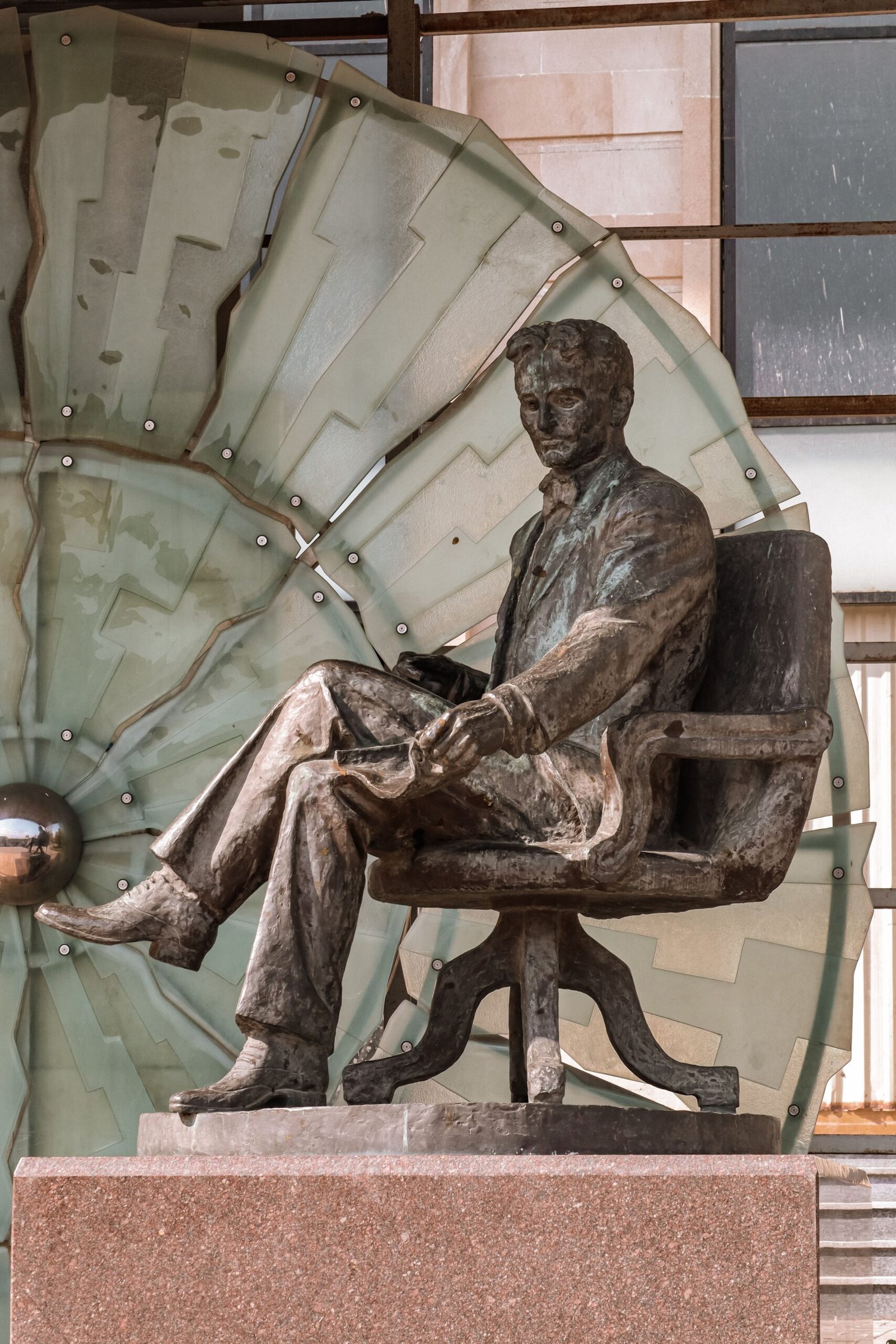
Introduction
In the annals of scientific history, certain figures stand as intellectual giants whose contributions transcend their own era, reshaping human understanding for generations to come. John Playfair, a Scottish minister turned scientist, represents exactly such a figure. Born in 1748 in Benvie, Forfarshire, Playfair rose to become one of the most influential yet often underappreciated minds of the Scottish Enlightenment. As a professor of mathematics and later natural philosophy at the University of Edinburgh, he bridged two worlds—mathematics and geology—in a manner that few have equalled. His exposition of James Hutton’s geological theories through his landmark work Illustrations of the Huttonian Theory of the Earth (1802) transformed geology from a speculative pursuit into a rigorous scientific discipline. Yet beyond his geological advocacy, Playfair left indelible marks on mathematics through his formulation of a key axiom in Euclidean geometry and laid foundations that would influence scientific thought for centuries. This article explores the life, work, and enduring legacy of John Playfair, examining why his contributions remain vital to modern scientific understanding.
The Life and Times of a Scottish Polymath
Playfair’s journey from a minister’s son to a leading scientific figure reflects the intellectual ferment of eighteenth-century Scotland. Born to Reverend James Playfair, the kirk minister of Liff and Benvie, young John received his early education at home before entering the University of St Andrews at the age of fourteen. His theological studies culminated in 1770 when he was licensed to preach by the Church of Scotland, yet the pulpit was never to become his primary vocation. Following his father’s death in 1772, Playfair briefly succeeded him as minister of the united parishes of Liff and Benvie, but his true passions lay elsewhere—in the realms of mathematics, physics, and the emerging science of geology. His resignation from the ministry in 1782 to become tutor to the Ferguson family of Raith proved pivotal, granting him regular access to Edinburgh’s vibrant intellectual circles and establishing connections with luminaries such as Adam Ferguson and the Astronomer Royal Nevil Maskelyne. The year 1785 marked a turning point when Playfair was appointed joint Professor of Mathematics at the University of Edinburgh, a position he held until 1805 when he exchanged it for the Chair of Natural Philosophy, succeeding John Robison. This academic trajectory positioned him at the heart of Scotland’s intellectual renaissance, where he would make his most lasting contributions.
Playfair’s Axiom: A Cornerstone of Mathematical Thought
Among mathematicians, Playfair is best remembered for his elegant reformulation of Euclid’s parallel postulate. In his 1795 textbook Elements of Geometry, Playfair presented what is now universally known as Playfair’s axiom. This axiom states that through any given point not on a given line, there is exactly one line parallel to the given line. While Playfair was not the original author of this formulation—he himself credited the Reverend William Ludlam and others with prior use—his textbook popularised the concept and established it as the standard replacement for Euclid’s notoriously complex fifth postulate. The significance of this contribution cannot be overstated; Playfair’s axiom provided a clearer, more intuitive foundation for Euclidean geometry that generations of students would encounter in their mathematical education. The axiom’s clarity allowed mathematicians to more readily explore the logical consequences of alternative geometries, ultimately contributing to the development of non-Euclidean geometry in the nineteenth century. Elements of Geometry itself proved remarkably successful, passing through numerous editions and cementing Playfair’s reputation as a mathematical educator of rare ability.
The Huttonian Theory and the Birth of Modern Geology
Playfair’s most profound influence, however, came through his geological work. James Hutton, the Edinburgh physician and gentleman farmer, had developed a revolutionary theory of the Earth in the 1780s and 1790s, proposing that the planet’s features were shaped by natural processes operating over vast periods—a concept that directly challenged the then-dominant catastrophic interpretation of Earth history, which held that the planet was no more than six thousand years old. However, Hutton’s writing was notoriously dense and difficult to comprehend, and his ideas struggled to gain wider acceptance. This was the challenge that Playfair undertook with remarkable success. His Illustrations of the Huttonian Theory of the Earth (1802) presented Hutton’s concepts with what contemporaries praised as “concise language and clear argumentation,” making these revolutionary geological principles accessible to a broad scientific audience for the first time. Through this work, Playfair articulated and expanded upon Hutton’s concept of uniformitarianism—the principle that the Earth’s features generally represent a response to former processes similar in kind to those operating today. This principle would later be championed by Charles Lyell and become the cornerstone upon which modern geology is built.
The Uniformitarian Vision: Understanding Deep Time
Playfair’s exposition of Hutton’s theory fundamentally altered humanity’s understanding of time. The concept of uniformitarianism posited that the same natural processes observed today—erosion, sedimentation, volcanic activity—have been at work throughout Earth’s history, operating at broadly similar rates and thus requiring immense periods of time to produce the geological features visible in the landscape. This meant that the Earth was not merely thousands, but millions or even hundreds of millions of years old. Playfair’s book presented this radical notion with such clarity and persuasive force that it gradually won converts among the scientific community, despite fierce opposition from Neptunists who believed that rocks had precipitated from a primordial ocean and catastrophists who insisted on the central role of supernatural interventions in Earth history. As one account notes, “the clarity of Playfair’s explanations was instrumental in popularising Hutton’s geological theories, many of which are now recognised as key principles of modern geology”. The uniformitarian perspective that Playfair championed established the methodological foundation for geology as a science, asserting that natural phenomena must be explained by natural causes—a principle that remains fundamental to scientific inquiry across all disciplines.
Playfair’s Broader Scientific Contributions
Beyond his celebrated work in geology and mathematics, Playfair made significant contributions across a remarkable range of scientific fields. He was the first to propose that rivers cut their own valleys, a concept that seems obvious today but represented a significant advance in understanding landscape formation at the time. He also recognised the transport role of glaciers, foreshadowing later developments in glacial geology. His Outlines of Natural Philosophy (1812-1816) provided a comprehensive overview of physical science that served as the basis for his university lectures and influenced scientific education for decades. Playfair also engaged with the astronomical debates of his era, publishing a review of Laplace’s Traité de Mécanique Céleste and expressing his views on Indian astronomy and trigonometry in several papers. His “Dissertation on the Progress of Mathematical and Physical Science since the Revival of Learning in Europe,” published in the Supplement to the Encyclopaedia Britannica, offered a sweeping survey of scientific achievement that demonstrated his extraordinary breadth of knowledge. These contributions were recognised by his peers through election to the Royal Society of London in 1807 and his long service as General Secretary to the Royal Society of Edinburgh, a position he held from 1798 until his death in 1819.
The Legacy of John Playfair
Playfair’s legacy extends far beyond his published works. He was instrumental in establishing geology as a formal scientific discipline, bridging the gap between Hutton’s foundational insights and their eventual acceptance by the broader scientific community. His defence of uniformitarianism created the intellectual framework within which Charles Lyell and later Charles Darwin could develop their transformative theories. In mathematics, his formulation of the parallel postulate remains a standard element of geometry education to this day. The recognition of his importance is evident in the naming of craters on both Mars and the Moon in his honour, as well as the mineral playfairite. His nephew, William Henry Playfair, carried on the family tradition of distinction, becoming a prominent architect who designed much of Edinburgh’s New Town and the monument to John Playfair that stands on Calton Hill. Perhaps most significantly, Playfair’s work exemplifies the intellectual virtues of the Scottish Enlightenment—clear thinking, rigorous argumentation, and a commitment to naturalistic explanation that would come to define modern science. He was a man who, in the words of one assessment, “played a prominent part, on the liberal side” in the intellectual controversies of his day, championing reason and evidence against obscurantism and dogma.
Conclusion
John Playfair stands as a towering figure in the history of science, a man whose contributions shaped both the mathematics classroom and the geological field. His ability to synthesise and communicate complex ideas transformed James Hutton’s dense geological speculations into a coherent and persuasive theory that would eventually become the foundation of modern geology. His reformulation of the parallel postulate provided a clearer foundation for Euclidean geometry that served students and scholars for generations. Through his textbooks, his university lectures, and his editorial work for the Royal Society of Edinburgh, Playfair helped establish the intellectual infrastructure of modern science. Yet perhaps his most enduring legacy lies in his unwavering commitment to the principle that the natural world must be understood through natural causes—a principle that remains the bedrock of scientific inquiry. As we face contemporary challenges in understanding our planet’s complex systems, Playfair’s vision of a slow, steady Earth shaped by ongoing natural processes reminds us of the deep timescales involved and the importance of patient, careful observation. In celebrating John Playfair, we celebrate not just a figure of the Scottish Enlightenment, but a foundational thinker whose ideas continue to illuminate our understanding of the world.
Frequently Asked Questions
1. What is John Playfair best known for?
John Playfair is best known for two major contributions: his exposition of James Hutton’s geological theory in Illustrations of the Huttonian Theory of the Earth (1802), which established the principle of uniformitarianism in geology, and his formulation of Playfair’s axiom, an alternative to Euclid’s parallel postulate in geometry.
2. What is Playfair’s axiom in geometry?
Playfair’s axiom states that through any given point not on a given line, there is exactly one line parallel to the given line. This axiom replaced Euclid’s more complex fifth postulate in many geometry textbooks and remains a standard formulation used in geometry education today.
3. What was the significance of Playfair’s book on Hutton’s theory?
Playfair’s Illustrations of the Huttonian Theory of the Earth was crucial because Hutton’s original writing was notoriously difficult to understand. Playfair’s clear, accessible exposition popularised Hutton’s ideas, including the concept that the Earth is immensely old and that geological features are shaped by gradual processes similar to those operating today.
4. What is uniformitarianism?
Uniformitarianism is the geological principle that the Earth’s features have been shaped by natural processes operating at broadly similar rates throughout history, meaning that the same causes observable today were also at work in the past. Playfair championed this concept, which became a foundational principle of modern geology.
5. Was John Playfair also a mathematician?
Yes, Playfair was a distinguished mathematician. He was Professor of Mathematics at the University of Edinburgh from 1785 to 1805 and wrote the influential textbook Elements of Geometry (1795). He is particularly remembered for his axiom concerning parallel lines, which bears his name.
6. What were Playfair’s other scientific contributions?
Playfair was the first to propose that rivers cut their own valleys and recognised the transport role of glaciers in landscape formation. He also wrote on astronomy, natural philosophy, and contributed extensively to the Edinburgh Review and the Encyclopaedia Britannica, while serving as General Secretary of the Royal Society of Edinburgh for over two decades.
7. How is John Playfair remembered today?
Playfair is remembered through various honours, including craters on Mars and the Moon named after him, the mineral playfairite, and a monument on Calton Hill in Edinburgh, erected in his honour by his nephew, the architect William Henry Playfair.
8. Did John Playfair invent the Playfair cipher?
No, the Playfair cipher was not invented by John Playfair. It was developed by Charles Wheatstone in 1854 and named after Lyon Playfair, 1st Baron Playfair, a promoter of the technique for British military use. The Playfair family name links these figures, but John Playfair (1748-1819) and Lyon Playfair (1818-1898) were distinct individuals.

Chrystie Jenner is best known as the first wife of Olympic gold medalist and television personality Caitlyn Jenner (formerly known as Bruce Jenner). Although she generally maintained a private lifestyle compared to many members of the extended Jenner-Kardashian family, Chrystie Jenner has remained an interesting public figure because of her role during Caitlyn Jenner’s rise to international fame. Their marriage began before Olympic success transformed their lives, making Chrystie an important part of that early journey. Over the years, many readers have searched for information about Chrystie Jenner’s biography, early life, family, career, children, and personal story. While she has largely stayed away from the spotlight, her life continues to attract curiosity due to her connection with one of America’s most recognizable families.
Chrystie Jenner Early Life and Background
Chrystie Jenner was born and raised in the United States and spent much of her early years living a relatively private life. Unlike celebrities who enter the entertainment industry at a young age, she experienced a fairly typical upbringing before becoming associated with public attention. Information regarding her childhood, education, and immediate family has always remained limited because she preferred privacy over media exposure. Even after becoming connected to one of the world’s most famous families, Chrystie rarely sought interviews or public appearances. This reserved personality helped her maintain a level of normalcy despite increasing public interest in her personal life.
Growing up, Chrystie developed values centered on family, hard work, and supporting those closest to her. These qualities later became evident during her marriage, especially when Caitlyn Jenner was working toward athletic success. Rather than seeking recognition herself, Chrystie focused on creating stability at home while supporting her husband’s ambitions.
Marriage to Caitlyn Jenner
Chrystie Jenner married Bruce Jenner, now known as Caitlyn Jenner, in 1972. At the time, Bruce Jenner was an emerging athlete with dreams of becoming one of the world’s greatest decathletes. Their relationship began long before international fame arrived, allowing Chrystie to witness the challenges, sacrifices, and determination required to compete at the highest athletic level.
During the marriage, Chrystie provided emotional encouragement while Caitlyn trained extensively for major competitions. Their partnership existed during a defining period in sports history, culminating in Caitlyn Jenner winning the Olympic gold medal in the decathlon at the 1976 Summer Olympics in Montreal. This historic achievement transformed Caitlyn into an international celebrity, bringing sudden media attention that naturally extended to Chrystie and their family.
Family and Children
Chrystie Jenner and Caitlyn Jenner welcomed two children during their marriage: Burt Jenner and Cassandra “Casey” Jenner. Both children have maintained connections with the broader Jenner family while also pursuing their own personal and professional interests.
As a mother, Chrystie prioritized raising her children with care and stability despite the increasing public attention surrounding the family. She focused on providing a supportive environment during a period when celebrity status was rapidly changing their lives. Her dedication to family responsibilities became one of the defining characteristics of her personal journey.
Career and Professional Life
Compared to many public figures connected to Hollywood or reality television, Chrystie Jenner maintained a relatively low-profile career. Rather than pursuing widespread fame, she concentrated on supporting her family while managing personal and professional responsibilities outside constant media coverage.
Because she intentionally lived away from the entertainment spotlight, publicly available information regarding her professional career remains limited. Nevertheless, many people respect her decision to value privacy and independence over celebrity culture. This choice has allowed her to live a more balanced life while remaining remembered for her role during an important chapter of the Jenner family’s history.
Life After Divorce
Chrystie Jenner and Caitlyn Jenner eventually divorced in 1981 after nearly a decade of marriage. Like many public separations involving well-known personalities, their divorce attracted media interest. However, Chrystie largely avoided public controversy and continued focusing on her own life and her children.
Following the divorce, she maintained a quieter lifestyle and stayed away from reality television and celebrity media that later became closely associated with members of the Kardashian-Jenner family. Her preference for privacy has helped preserve her reputation as someone who values personal dignity over publicity.
Chrystie Jenner’s Legacy
Although Chrystie Jenner is not a celebrity in the traditional sense, her place in the Jenner family history remains significant. She supported Caitlyn Jenner during the years leading to Olympic greatness and helped build a family that continues to receive worldwide attention today.
Many people appreciate Chrystie’s story because it represents resilience, family commitment, and personal strength. Instead of embracing constant media exposure, she chose a quieter path that reflects her independent character. Her life reminds readers that not every influential person seeks fame; sometimes the greatest impact comes through supporting loved ones during life’s most important moments.
Interesting Facts About Chrystie Jenner
- Chrystie Jenner was Caitlyn Jenner’s first wife.
- She married Caitlyn in 1972.
- Their marriage lasted until 1981.
- She is the mother of Burt Jenner and Cassandra “Casey” Jenner.
- She supported Caitlyn during the journey to Olympic gold.
- She has consistently preferred a private lifestyle.
- She rarely gives public interviews.
- She remains an important figure in the early history of the Jenner family.
Conclusion
Chrystie Jenner continues to attract public interest because of her connection to one of America’s best-known families, yet her own story deserves recognition. From her early life and marriage to Caitlyn Jenner to raising a family and choosing privacy over celebrity, her journey reflects resilience, dedication, and strength. While much of today’s attention focuses on the Kardashian-Jenner media empire, Chrystie Jenner represents an earlier chapter marked by family values, personal sacrifice, and unwavering support during a pivotal period in Caitlyn Jenner’s athletic career. Her biography remains relevant to readers seeking a deeper understanding of the people who shaped the Jenner family’s history.
Frequently Asked Questions (FAQ)
Who is Chrystie Jenner?
Chrystie Jenner is the first wife of Caitlyn Jenner (formerly Bruce Jenner) and the mother of Burt Jenner and Cassandra “Casey” Jenner.
Why is Chrystie Jenner famous?
She is known for her marriage to Caitlyn Jenner during the years leading up to the 1976 Olympic gold medal victory.
Does Chrystie Jenner have children?
Yes. She has two children: Burt Jenner and Cassandra “Casey” Jenner.
When did Chrystie Jenner marry Caitlyn Jenner?
They married in 1972.
When did Chrystie Jenner and Caitlyn Jenner divorce?
Their marriage ended in 1981.
What does Chrystie Jenner do now?
Chrystie Jenner has largely remained out of the public spotlight and continues to maintain a private life.
Why is Chrystie Jenner still searched online?
People frequently search for her biography because of her role in the early history of the Jenner family and her connection to Caitlyn Jenner.
Lifestyle
Jean Christensen : Biography, Career, Family, Relationship with André the Giant, and Legacy

Jean Christensen remains a fascinating figure in professional wrestling history, largely because of her relationship with legendary wrestler André the Giant. While she never sought the same level of public attention as the wrestling icon, her life continues to attract interest from wrestling fans, biographers, and those curious about the personal story behind one of sports entertainment’s most recognizable names.
As the mother of Robin Christensen-Roussimoff, André the Giant’s only child, Jean Christensen occupies a unique place in wrestling history. Despite the ongoing curiosity surrounding her life, much of her story has remained private, contributing to continued online searches in 2026.
This complete guide explores Jean Christensen’s early life, professional career, relationship with André the Giant, family life, daughter, and lasting legacy while distinguishing verified facts from speculation.
Who Was Jean Christensen?
Jean Christensen was an American public relations professional and wrestling industry employee who became widely known through her relationship with André the Giant, one of the most celebrated professional wrestlers of all time.
Although she is frequently described only as André’s former partner, Jean Christensen had her own professional career within the wrestling business. She reportedly worked in public relations for wrestling promotions, allowing her to interact with athletes, promoters, and media representatives during a transformative era of professional wrestling.
Today, she is primarily recognized as:
- Public relations professional
- Former wrestling industry employee
- Mother of Robin Christensen-Roussimoff
- Former partner of André the Giant
Unlike many people connected to celebrities, Jean Christensen maintained a relatively private life outside the spotlight.
Early Life and Career
Publicly available information about Jean Christensen’s childhood, education, and early family background is limited. She never pursued celebrity status, and relatively few verified records document her personal history before entering the wrestling industry.
What is generally accepted is that she worked in public relations, a role involving communication between wrestling organizations, athletes, the media, and promotional events. During the late 1970s and early 1980s, professional wrestling was expanding internationally, creating opportunities for communications and promotional professionals.
Her experience in public relations likely contributed to her meeting many prominent wrestling personalities, including André the Giant.
Relationship with André the Giant
Jean Christensen is best known for her relationship with André René Roussimoff, universally recognized as André the Giant.
André became one of the biggest attractions in professional wrestling thanks to his extraordinary size, charisma, and international fame. His appearances in organizations such as the World Wrestling Federation (WWF) and his role in the classic film The Princess Bride helped make him a global icon.
Jean Christensen and André the Giant were involved in a relationship during the late twentieth century. Although they were not married, their relationship resulted in the birth of their daughter, Robin Christensen-Roussimoff.
Because André spent much of his career traveling internationally, the relationship attracted public attention over the years. Numerous biographies and documentaries have discussed the challenges created by his demanding schedule and worldwide wrestling commitments.
Robin Christensen-Roussimoff: Their Daughter
One of the most important aspects of Jean Christensen‘s legacy is her daughter, Robin Christensen-Roussimoff.
Robin is the only child of André the Giant and has participated in documentaries, interviews, and public discussions about her father’s life and legacy. Through these appearances, she has provided fans with valuable insight into André beyond his wrestling persona.
Robin has also worked to preserve her father’s memory by:
- Participating in wrestling documentaries
- Sharing family stories
- Supporting historical projects
- Attending wrestling-related events
- Helping educate newer generations about André’s remarkable career
Jean Christensen played a significant role in raising Robin, largely outside the intense spotlight surrounding professional wrestling.
Life Away from Public Attention
Unlike many individuals connected to internationally famous athletes, Jean Christensen deliberately maintained her privacy.
She rarely appeared in:
- Television interviews
- Wrestling media
- Celebrity publications
- Entertainment events
- Public speaking engagements
This decision has resulted in relatively little verified information regarding her personal interests, later career, or private life.
Much of what is circulated online about Jean Christensen remains speculative. Responsible biographies should distinguish confirmed historical facts from unsupported rumors.
Her preference for privacy has contributed to the ongoing curiosity surrounding her life.
Jean Christensen’s Legacy in Wrestling History
Although Jean Christensen never became a professional wrestler herself, she remains connected to wrestling history through both her relationship with André the Giant and her daughter.
Her legacy includes several important aspects.
Connection to One of Wrestling’s Greatest Legends
Few athletes have had the global impact of André the Giant, making those connected to his personal life subjects of continued historical interest.
Support Within the Wrestling Industry
Her reported work in public relations demonstrates that many important contributors to wrestling operated behind the scenes rather than inside the ring.
Mother of André’s Only Child
Robin Christensen-Roussimoff continues preserving André’s legacy through documentaries and educational appearances, ensuring Jean Christensen remains an important part of wrestling history.
Historical Interest
As documentaries and biographies continue exploring André’s extraordinary life, public curiosity regarding Jean Christensen also remains strong.
Frequently Asked Questions About Jean Christensen
Who was Jean Christensen?
Jean Christensen was an American public relations professional who became widely known through her relationship with legendary wrestler André the Giant.
Was Jean Christensen married to André the Giant?
No. Although they shared a relationship, they were not married.
Who is Jean Christensen’s daughter?
Her daughter is Robin Christensen-Roussimoff, the only child of André the Giant.
What did Jean Christensen do professionally?
She reportedly worked in public relations within the professional wrestling industry, helping support communications and promotional activities.
Why is Jean Christensen still searched online?
People continue researching her because of her connection to André the Giant, wrestling history, and interest in Robin Christensen-Roussimoff’s family background.
Final Thoughts
In 2026, Jean Christensen continues to be remembered as an important figure connected to one of professional wrestling’s greatest legends. While much of her personal life remained private, her relationship with André the Giant and her role as the mother of Robin Christensen-Roussimoff ensure her lasting place in wrestling history.
Unlike many individuals associated with celebrities, Jean Christensen chose a life largely outside the public spotlight. As a result, verified information about her remains relatively limited, making it important to rely on credible historical sources rather than speculation.
Her story also highlights the many individuals who contributed to the wrestling industry beyond the ring. Through her work in public relations, her role in raising André the Giant’s daughter, and her connection to one of sports entertainment’s most iconic figures, Jean Christensen remains a person of enduring interest for wrestling fans, historians, and biographers alike.
As documentaries, books, and historical research continue to explore the life of André the Giant, Jean Christensen’s legacy will remain an important part of that broader narrative, reminding fans that every legendary career is shaped not only by public achievements but also by the people behind the scenes.


Tatsuya Shiba: Biography, Powers, Personality, and Story Explained

Met Live in HD: Complete Guide to the Metropolitan Opera’s Live Broadcasts

Boy in ASL: How to Sign “Boy” in American Sign Language

Droven.io Review 2026: The Honest Truth About This AI Knowledge Platform

Keiko Fujimoto: The Life and Legacy of Sunny Balwani’s Ex-Wife

The Enigmatic Life of Solica Casuto: From Greek Actress to Andy Griffith’s Second Wife and Her Choice of Privacy
 Tech3 months ago
Droven.io Review 2026: The Honest Truth About This AI Knowledge Platform
- Fashion3 months ago
Keiko Fujimoto: The Life and Legacy of Sunny Balwani’s Ex-Wife
- Fashion3 months ago
The Enigmatic Life of Solica Casuto: From Greek Actress to Andy Griffith’s Second Wife and Her Choice of Privacy
- Tech3 months ago
Antonimar Mello: The Quiet Strength Behind a Pop Icon
- Fashion3 months ago
Mark Fluent: Your Comprehensive Guide to Achieving Peak Performance and Unlocking Your True Potential
- Sports3 months ago
Amy Dettbarn: The Untold Story of the Woman Behind UConn Star Paige Bueckers
- Fashion3 months ago
Carlos Scola Pliego: The Spanish Filmmaker Who Captured Sade’s Heart
- Fashion2 months ago
Monika Leveski : Biography, Design Philosophy, Art Career, and Modern Elegance Explained