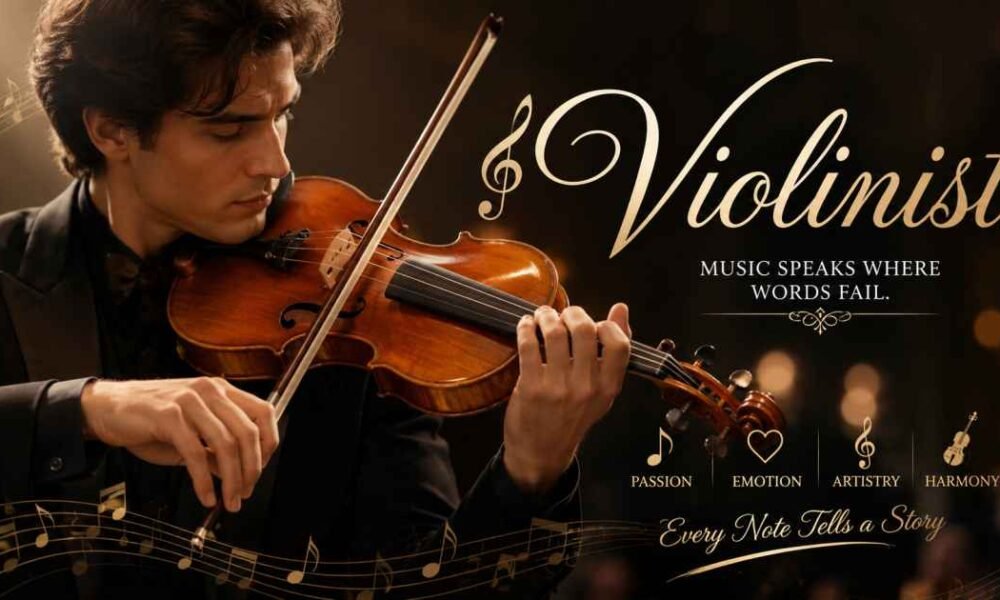
A violinist is a musician who specializes in playing the violin, one of the world’s most expressive and recognizable string instruments. Whether performing classical masterpieces, jazz improvisations, folk melodies, film scores, or modern pop arrangements, violinists bring emotion, technique, and artistry to every performance.
In 2026, violinists continue to play an important role in orchestras, chamber ensembles, solo performances, recording studios, film production, education, and digital content creation. Thanks to social media, streaming platforms, and online learning, today’s violinists have more opportunities than ever to reach global audiences and build successful careers.
This comprehensive guide explores everything you need to know about violinists, from their history and skills to career opportunities and how beginners can start learning the instrument.
Who Is a Violinist?
A violinist is someone who plays the violin, a four-string bowed instrument that belongs to the string family. Violinists may perform professionally, teach students, compose music, or simply enjoy playing as a hobby.
Their responsibilities often include:
- Performing solo concerts
- Playing in symphony orchestras
- Participating in chamber music ensembles
- Recording music for films, television, and video games
- Teaching private or group violin lessons
- Practicing daily to improve technique and musical expression
Some violinists dedicate their careers to classical music, while others specialize in jazz, bluegrass, country, rock, Celtic, traditional folk, or contemporary genres.
Regardless of style, becoming a successful violinist requires discipline, creativity, and years of dedicated practice.
The History of the Violinist Profession
The violin originated in 16th-century Italy and quickly became one of the most important instruments in Western music.
Throughout history, violinists have shaped musical culture by performing works from legendary composers such as:
- Antonio Vivaldi
- Johann Sebastian Bach
- Wolfgang Amadeus Mozart
- Ludwig van Beethoven
- Niccolò Paganini
- Pyotr Ilyich Tchaikovsky
- Johannes Brahms
During the Romantic era, virtuoso violinists amazed audiences with extraordinary technical skill and expressive performances.
Today, violinists perform not only in prestigious concert halls but also on:
- YouTube
- Spotify
- TikTok
- Film soundtracks
- Live streaming platforms
- International music festivals
The profession has evolved from traditional concert stages into a truly global digital career.
Essential Skills Every Violinist Needs
Becoming an accomplished violinist involves much more than learning to play notes correctly.
Important skills include:
Technical Ability
A violinist must develop:
- Accurate intonation
- Bow control
- Finger placement
- Vibrato
- Shifting positions
- Double stops
- Harmonics
- Fast scales and arpeggios
Musical Interpretation
Great violinists communicate emotion through:
- Dynamics
- Tempo changes
- Phrasing
- Tone color
- Musical storytelling
Sight Reading
Professional violinists often perform unfamiliar music with little preparation, making strong sight-reading skills extremely valuable.
Performance Confidence
Whether playing for five people or five thousand, confidence helps musicians perform at their best.
Consistent Practice
Most advanced violinists practice 2–6 hours daily, focusing on technique, repertoire, and performance preparation.
Different Types of Violinists
Not every violinist follows the same career path. In 2026, musicians work across many different musical styles.
Classical Violinists
These performers specialize in orchestral works, concertos, sonatas, and chamber music.
Solo Violinists
Soloists perform with orchestras or give independent recitals featuring technically demanding repertoire.
Studio Violinists
Studio musicians record music for:
- Movies
- Television
- Commercials
- Video games
- Streaming services
- Albums
Folk and Traditional Violinists
Known in some traditions as fiddlers, these musicians perform Irish, Scottish, Appalachian, bluegrass, and regional folk music.
Jazz Violinists
Jazz violinists blend improvisation with advanced harmony and rhythm.
Contemporary Violinists
Many modern artists combine violin with:
- Electronic music
- Pop
- Rock
- Hip-hop
- Ambient music
Some also create original arrangements that attract millions of online viewers.
How to Become a Violinist in 2026
Anyone can begin learning the violin with dedication and the right guidance.
Choose the Right Instrument
Beginners should select a violin that fits their age and arm length. Adults generally use a full-size (4/4) violin, while younger students may require smaller sizes.
Take Lessons
Learning from an experienced instructor helps build proper posture, bow technique, and musical fundamentals while avoiding bad habits.
Practice Regularly
Consistency matters more than marathon sessions. Even 30–60 minutes of focused daily practice can produce steady improvement.
Study Music Theory
Understanding rhythm, scales, harmony, and notation makes learning easier and improves overall musicianship.
Perform Frequently
Recitals, school concerts, community ensembles, and online performances help build confidence and stage experience.
Keep Learning
Many violinists continue studying throughout their careers by attending masterclasses, workshops, festivals, and advanced training programs.
Career Opportunities for Violinists
Modern violinists have a wide variety of professional opportunities beyond traditional orchestras.
Popular career paths include:
- Symphony orchestra musician
- Solo concert artist
- Chamber ensemble performer
- Music teacher
- University instructor
- Film soundtrack performer
- Session recording musician
- Cruise ship entertainer
- Wedding and event performer
- Church musician
- Content creator
- YouTube performer
- Streaming artist
- Composer
- Music producer
- Online music educator
Digital platforms have made it possible for talented violinists to earn income through performances, online lessons, memberships, sponsorships, and music sales.
Why Violinists Continue to Inspire Audiences
The violin remains one of the most emotionally powerful musical instruments ever created. Skilled violinists can express joy, sorrow, excitement, romance, and hope using only four strings and a bow.
Beyond entertainment, learning the violin also offers many personal benefits:
- Improves concentration
- Strengthens memory
- Develops discipline
- Enhances creativity
- Builds confidence
- Encourages emotional expression
- Supports lifelong learning
- Connects people across cultures
In schools, orchestras, recording studios, and online communities, violinists continue to inspire millions of listeners worldwide.
Conclusion
A violinist is far more than someone who plays an instrument. They are storytellers, performers, educators, and artists who use music to connect with audiences across generations and cultures.
In 2026, the role of the violinist is more diverse than ever. From prestigious concert halls to social media platforms, from classical orchestras to film studios and contemporary collaborations, violinists continue to shape the global music landscape.
Whether your goal is to become a professional performer, teach future musicians, or simply enjoy playing for personal fulfillment, learning the violin is a rewarding journey. With consistent practice, quality instruction, and a passion for music, anyone can develop the skills needed to become a confident and expressive violinist.