Author: gpcomunity.blog@gmail.com

  • Mastering the Prefixes: A Comprehensive Guide to Inter vs. Intra

    Mastering the Prefixes: A Comprehensive Guide to Inter vs. Intra

    Introduction

    Have you ever paused mid-sentence, torn between using inter or intra? You are not alone. These two tiny prefixes have become a classic pitfall in the English language, causing headaches for students, professionals, and even experienced writers. Their similar spellings and pronunciations often lead to them being used interchangeably, a mistake that can obscure your intended meaning and undermine your clarity.

    However, the difference between them could not be more straightforward or more critical. Inter– and intra– are Latin prefixes that serve as linguistic compasses, telling you exactly where an action, relationship, or object is located: one points outward, while the other points inward. Whether you are discussing international politics, the internal dynamics of a team, or the forces holding molecules together, mastering this distinction is key to precise and effective communication. In this comprehensive guide, we will definitively decode the “inter vs. intra” dilemma, providing you with clear definitions, abundant real-world examples, and foolproof memory tricks to ensure you never mix them up again.


    The Core Difference: Between vs. Within

    The fundamental, golden rule that governs the use of these prefixes is this: inter– means “between” or “among,” while intra– means “within” or “inside.” This single rule is the foundation for everything else. Think of inter– as the prefix for connection and exchange between distinct and separate entities. On the other hand, intra– is the prefix for containment, describing phenomena that are confined to the boundaries of a single entity .

    Imagine the prefixes as describing the scope of a conversation. An interaction happens when two or more people are speaking between themselves. In contrast, an intrapersonal thought is a dialogue you have within your own mind . This core difference, though simple in principle, has vast implications across different fields, from geography to biology to business, demonstrating how a single prefix can change the entire context of a word.

    The Prefix Inter-: “Between” Groups and Systems

    When you see the prefix inter-, you should immediately think of connections, relationships, or actions that take place among or between two or more distinct groups, places, or things. It is the prefix of bridges and networks, highlighting the space and interaction where separate entities meet .

    One of the most common examples is the internet. This global system connects computer networks worldwide, facilitating communication between people and organizations across the globe . Similarly, an interstate highway is a road system that crosses state lines, physically connecting different states to one another .

    The prefix inter- is also used to describe a wide range of relationships, such as in international affairs, which involve multiple nations, or interpersonal skills, which are the tools we use to communicate with other people . The key takeaway is always a sense of openness and connection between different entities.

    The Prefix Intra-: “Within” a Single Entity

    In contrast, intra- describes something that exists or happens inside a single entity. It is the prefix of internals, focusing on what is contained within one group, place, or individual. This prefix suggests a closed system, where its scope is limited to the boundaries of its subject .

    For instance, an intranet is a private network only accessible to a specific organization’s employees; it is a network within a single company . An intrastate highway, conversely, is a road system that only connects cities within one state’s borders . Another strong example is intravenous medication, which is administered directly into a patient’s vein . These examples all showcase the “contained” nature of the prefix, emphasizing an internal action that does not cross any boundaries.


    Real-World Examples: Seeing the Difference

    To truly cement your understanding, it is best to see these prefixes in action across various contexts. By juxtaposing an inter- word with its intra- counterpart, the difference becomes immediately and vividly clear.

    Geography: Interstate vs. Intrastate

    This is perhaps the most classic example and an excellent starting point. An interstate highway is a major road that crosses state lines, connecting one state to another and facilitating travel between them . For example, the I-95 interstate runs from Maine to Florida, physically linking states along the East Coast. An intrastate highway, however, is a road that lies entirely within the borders of a single state. It is part of a state’s internal road system, designed to connect cities and towns within its own boundaries . The difference is simple: one goes between states, the other is confined within one state.

    Communication: Interpersonal vs. Intrapersonal

    This distinction is crucial in psychology and social dynamics. Interpersonal skills refer to the abilities you use to interact and communicate with other people. It’s about the dynamic between two or more individuals, involving skills like empathy, active listening, and teamwork . In contrast, intrapersonal skills relate to your internal world; it is the relationship you have with yourself. This involves self-awareness, self-regulation, and the ability to understand and manage your own thoughts and emotions . It is a conversation within a single person.

    Networks: Internet vs. Intranet

    In the world of technology, the distinction is just as clear. The internet is the vast, global network of interconnected computer networks that is open to the public. It allows for the exchange of information between billions of users worldwide . An intranet, however, is a private, internal network that is exclusive to a specific organization, like a company or school. It is designed for sharing resources and information within that closed group, and it is not accessible to outsiders .

    Science: Intermolecular vs. Intramolecular Forces

    Even in the world of chemistry, the prefix makes a significant difference. Intermolecular forces are the attractive forces that exist between separate molecules, influencing how they interact with one another . Intramolecular forces, however, are the forces that hold atoms together within a single molecule, such as the covalent or ionic bonds that form a chemical compound . The prefix tells you where the forces are acting: between molecules or within one.

    Business: Intercompany vs. Intracompany

    In the corporate world, these prefixes describe the flow of transactions and communication. An intercompany transaction is a financial or business exchange that occurs between two separate companies or subsidiaries . Intracompany communication, on the other hand, refers to the flow of information within a single company, ensuring that employees and departments are aligned and informed .


    How to Remember the Difference: Foolproof Tricks

    If you ever find yourself hesitating, there are a few simple tricks you can use to quickly recall the correct prefix.

    The “E” and “A” Mnemonic

    This is one of the most effective memory aids. Look at the words inter and. Notice that inter contains the letter “E” (inter). Think of “E” for entertain or “open.” The word “open” also contains the letter “E,” and something inter is open to multiple things, existing between them. Conversely, intra contains the letter “A” (intra). Think of “A” for “within a” single group, or think of the word contained, which has the letter “A” and signifies a closed system . This simple letter association can be a quick and reliable way to choose the right prefix.

    Context is King: What is the Subject?

    Your final check should always be to consider what you are actually describing. Are you talking about a relationship between two or more things, people, or groups? If so, use inter-. Are you describing something that happens inside one thing or group, or something internal to a single entity? Then intra- is your correct choice. By questioning the scope of your subject, you can confidently determine which prefix fits.


    Conclusion

    The choice between inter and intra is more than a grammatical nicety; it is a fundamental tool for clear, precise, and effective communication. Whether you are navigating the complexities of international business, understanding the forces that hold the universe together, or simply striving to improve your writing, the ability to distinguish between the external connections of inter- and the internal confines of intra- is invaluable. By internalizing the core definitions, studying the contrasting examples, and using the memory aids we’ve discussed, you can permanently banish the “inter vs. intra” confusion from your mind. Ultimately, this small linguistic distinction empowers you to articulate your thoughts with greater accuracy and ensures your audience receives your intended message every time.


    Frequently Asked Questions (FAQ)

    1. What is the main difference between “inter” and “intra”?
    The primary and decisive difference is that inter– is a prefix meaning “between” or “among,” while intra– means “within” or “inside.” Inter- points to connections between distinct entities, while intra- points to things contained within a single entity .

    2. How can I remember when to use “inter” or “intra”?
    A great mnemonic is to remember that inter contains an “e,” which stands for “open” (and implies being open to other things), while intra contains an “a,” which can stand for “contained” (a closed system) . Another simple trick is to just ask yourself if you are describing something between things or within one thing.

    3. What are some common words that use the prefix “inter-“?
    There are many. Some of the most common include international (between nations), interstate (between states), interpersonal (between people), the internet (a global network between computers), and intermolecular (between molecules) .

    4. What are some common words that use the prefix “intra-“?
    Key examples of intra– words are intravenous (within a vein), intrastate (within a state), intrapersonal (within one’s own mind), an intranet (a network within one company), and intramural (within an institution) .

    5. Can “inter” and “intra” ever be used interchangeably?
    No, they are definitely not interchangeable. Using one instead of the other can completely change the meaning of a sentence. For example, an interstate highway connects states, while an intrastate highway is contained within one state . Because they are near-antonyms, using the wrong one will likely confuse your reader and will result in an inaccurate statement.

    6. Is there a hyphen after “inter” or “intra”?
    In general usage, no. Most words with these prefixes are not hyphenated, such as interstate and intracellular. However, some style guides may recommend a hyphen to avoid a double vowel (e.g., intra-arterial) or when used with a proper noun (e.g., inter-American) . When in doubt, it is best to consult your specific style guide or rely on the most common, unhyphenated form.

  • SHL: The Global Leader in Talent Assessment and People Science

    SHL: The Global Leader in Talent Assessment and People Science

    Introduction

    In the competitive landscape of modern recruitment and talent management, making informed decisions about people is paramount. Organizations worldwide strive to identify, develop, and retain the best talent to drive business success. Central to this endeavor is SHL, a name that has become synonymous with psychometric testing and talent assessment. As the world’s largest provider of objective, science-based people insights, SHL has revolutionized how companies approach hiring, development, and workforce planning. From its comprehensive test catalog to its cutting-edge digital platforms, SHL provides the tools necessary to measure cognitive abilities, personality traits, motivation, and job fit with unparalleled accuracy. This article serves as the definitive guide to understanding SHL, exploring its history, its most prominent assessment tools, and how both organizations and candidates can leverage its solutions effectively.

    Understanding SHL and Its Impact on Talent Management

    SHL is not merely a test publisher; it is a global leader in talent solutions, providing a unique portfolio of products driven by a team of over 300 people scientists . With over 35 million assessments taken annually worldwide, SHL’s influence on the global workforce is immense . The company’s science is drawn from the world’s largest bank of talent data, comprising over 45 billion data points on workforce skills, performance, and potential, which allows for highly accurate and predictive people decisions . The modern workforce demands agility and objectivity, and SHL provides precisely that. By combining rigorous scientific research with intuitive technology, SHL enables businesses to maximize the potential of their greatest asset—their people . This science-based approach helps organizations measure fit, readiness, and potential, gathering data on hard and soft skills, motivation, situational judgment, and cognitive ability through the industry’s broadest portfolio of assessment and interview technology .

    The SHL Assessment Portfolio: A Deep Dive

    SHL offers a vast array of assessments tailored to various job levels and industries. These assessments are designed to predict job performance and are validated through extensive research. The portfolio can be broadly categorized into ability tests, personality questionnaires, and skills assessments. Understanding the distinctions between these categories is crucial for effective use.

    Cognitive Ability Tests: These are among the most widely recognized SHL assessments, designed to measure an individual’s capacity to solve problems, process information, and learn new skills. Key types include:

    • SHL Verify G+: This is one of the most popular assessments, combining numerical, deductive, and inductive reasoning into a single, efficient test. It consists of 30 questions with a 36-minute time limit, providing a comprehensive measure of cognitive ability .

    • Numerical Reasoning: Tests the ability to interpret numerical, statistical, and graphical data to make correct decisions, featuring 18 questions in a 17-25 minute window .

    • Verbal Reasoning: Assesses the ability to understand and make logical deductions from written information, featuring 30 questions over 17-19 minutes .

    • Inductive Reasoning: Measures problem-solving ability using abstract shapes and patterns to identify rules and relationships, typically featuring 24 questions in 25 minutes .

    • Deductive Reasoning: Evaluates the ability to draw logical conclusions from provided information, featuring 18 questions in a 10-minute period .

    Personality and Motivational Questionnaires: These tools explore an individual’s working style and preferences. Unlike ability tests, there are no right or wrong answers, and candidates are not timed. The Occupational Personality Questionnaire (OPQ32) is a flagship product. It comprises over 100 question items that explore 32 specific personality qualities, compiling results into a report that provides deep insight into a candidate’s personality and potential competencies .

    Skills Assessments: SHL’s Global Skills Assessment (GSA) measures all 96 skills in its Universal Competency Framework (UCF). The assessment uses a short, forced-choice format where individuals compare brief behavioral statements, providing a complete view of workplace behaviors that drive performance across roles . It is globally normed and EEOC compliant, making it a legally defensible tool for hiring and development .

    The Candidate’s Guide to Acing SHL Tests

    For job seekers, receiving an invitation to complete an SHL assessment can be daunting. However, with the right preparation strategy, candidates can significantly improve their performance. The key is to approach the test with a clear plan.

    1. Familiarization and Practice: The most effective way to prepare is to take practice tests. This helps candidates understand the format, question styles, and time pressure they will face. Familiarity with the test structure reduces anxiety and allows candidates to focus on answering questions accurately .

    2. Understand What is Being Assessed: Each test is designed to measure specific competencies. For instance, the SHL Verify G+ measures how well candidates can work with information, spot patterns, and solve problems . Understanding the target competencies helps candidates focus their preparation on the right skills.

    3. Time Management is Crucial: SHL tests are timed, and completing all questions within the allotted time is a challenge. Candidates should manage their time effectively, reading each question carefully but not spending too long on a single, difficult question. It is often better to move on and return if time permits .

    4. Understand Question Logic: In verbal reasoning tests, the answer must be based strictly on the text provided. Do not rely on prior knowledge or common sense. If the text does not explicitly support a statement, the correct answer is “Cannot Say” . For deductive reasoning, accept all premises as true and follow the logic to a conclusion, regardless of how unrealistic the premises may seem .

    5. Know the Scoring System: There is no absolute “pass mark” for SHL tests. Scores are typically assessed on a percentile basis, comparing a candidate’s performance against a norm group of other test-takers. The goal is to outperform other candidates to advance to the next stage .

    SHL in the Enterprise: Platforms and Solutions

    For organizations, SHL provides a comprehensive ecosystem to manage talent decisions. The centerpiece of this is Talent Central, an intuitive digital platform that centralizes the administration of assessments, management of candidate invitations, access to detailed reports, and integration with existing HR software . This platform ensures that all assessment data is secure, GDPR compliant, and AI-regulated.

    Advanced Solutions: Beyond standard assessments, SHL offers specialized solutions to meet complex business challenges:

    • High Potential Identification: Using a robust model based on research with over 431,000 individuals, SHL helps organizations identify, develop, and retain their high-potential employees .

    • Digital Readiness: This solution helps organizations identify and assess talent capable of thriving in rapidly changing digital environments, mapping talent profiles across dimensions like Continuous Learning and Critical Analysis .

    • Leadership Management: SHL has identified 27 contextual challenges that predict a leader’s success or failure. Their leadership solutions objectively match leaders to the challenges they are best prepared to overcome, enhancing succession planning and development .

    The Science Behind SHL: Validity and Reliability

    The cornerstone of SHL’s success is its scientific validity. SHL assessments are not created in a vacuum; they are rigorously developed, tested, and validated to ensure they accurately predict job performance.

    Predictive Validity: Over 15 independent validation studies across various industries demonstrate that SHL’s Global Skills Assessment composites consistently predict supervisor-rated performance and productivity . This means that hiring managers using SHL assessments can be confident that their hiring decisions are backed by data that predicts on-the-job success.

    Global Norming and Fairness: SHL’s tools are globally normed, meaning they are benchmarked against a global sample of professionals, allowing for consistent comparisons across job levels and geographies . Furthermore, the assessments are built to support fair practices, grounded in Equal Employment Opportunity Commission (EEOC) guidance for equal opportunity. This makes them legally defensible in hiring processes, ensuring decisions are made on merit and job-relevant criteria .

    Conclusion

    SHL stands at the forefront of the talent assessment industry, providing the science-backed tools necessary for modern organizations to make objective, accurate, and fair people decisions. Whether it is a multinational corporation seeking to improve its hiring process or an individual preparing for a career-defining psychometric test, understanding SHL’s offerings is invaluable. The company’s unique blend of deep scientific research, comprehensive assessment portfolios, and advanced digital platforms empowers businesses to build a more skilled, diverse, and engaged workforce. For candidates, SHL tests represent a challenge that can be overcome with thorough preparation and a clear understanding of the assessment’s mechanics. As the world of work continues to evolve, SHL remains a critical partner, driving the future of talent management by helping companies unlock the full potential of their people.


    Frequently Asked Questions (FAQs)

    Q1: What exactly is SHL?

    A: SHL is a global leader in talent assessment and people science. It provides a wide range of psychometric tests, personality questionnaires, and skills assessments to help organizations make objective decisions about hiring, developing, and managing their employees .

    Q2: What are the most common types of SHL assessments?

    A: The most common SHL assessments include cognitive ability tests like the Verify G+ (which combines numerical, deductive, and inductive reasoning), the Occupational Personality Questionnaire (OPQ32), and the Global Skills Assessment (GSA) .

    Q3: Is there a specific pass mark for SHL tests?

    A: No, there is no universal pass mark. SHL tests are often scored on a percentile basis, comparing your performance to a norm group of other candidates. The top percentage of performers typically proceed to the next stage of the recruitment process .

    Q4: How can I best prepare for an SHL psychometric test?

    A: The best preparation involves practicing with sample tests to understand the format and time constraints, reviewing the specific competencies being assessed, and managing your time effectively during the actual test .

    Q5: What is the SHL Verify G+ test?

    A: The SHL Verify G+ is a cognitive ability test that measures a candidate’s ability to work with information and solve problems. It is a combined test featuring 30 questions across numerical, deductive, and inductive reasoning, to be completed in 36 minutes .

    Q6: What is the SHL Universal Competency Framework (UCF)?

    A: The UCF is a validated framework used by SHL to measure over 96 workplace skills. It provides a consistent benchmark for assessing and comparing employee competencies across different roles and geographies, helping organizations standardize their talent management practices .

    Q7: Are SHL assessments available online?

    A: Yes, SHL assessments are primarily administered online through their proprietary platform, Talent Central. This digital platform allows for secure, efficient, and scalable testing for candidates and employees worldwide .

  • The Funniest Names: A Deep Dive into Humorous Monikers That Will Make You Laugh Out Loud

    The Funniest Names: A Deep Dive into Humorous Monikers That Will Make You Laugh Out Loud

    Introduction

    Names are the very first gift we are given, a tag that follows us through life, shaping first impressions and often influencing our destiny. While most names are chosen with care, love, and a desire for a positive future, there exists a special, glorious corner of the naming world that defies all convention: the world of the truly funny names. These are not just names that are slightly unusual; they are names that stop you mid-sentence, induce a double-take, and inevitably spark a laugh. Whether they are brilliantly crafted puns, unfortunate accidents of language, or the result of parents with a wild sense of humor, these monikers provide a rich vein of comedy that never runs dry. From the playground to the boardroom, the simple mention of a name like “Anita Napp” or “Hugh Jass” can instantly diffuse tension and bring a smile to faces.

    The phenomenon of funny names is not merely a modern internet obsession; it is a cultural constant, a source of amusement that permeates various facets of our lives, from the geographic names of towns to the usernames we create for ourselves online. These names often become cultural touchstones, shared and celebrated for their wit and originality. They can be a great icebreaker or a source of enduring humor within a social circle. What makes a name funny is subjective, but often it relies on clever wordplay, unexpected combinations, or the sheer absurdity of the image a name conjures. This article is designed to be your comprehensive guide to the funniest names ever conceived, serving not just as a list, but as a deep exploration of the creativity, humor, and occasional unintentional comedy that goes into naming. We will explore the different categories of funny names, from the world of puns to celebrity baby name choices, and even take a look at some of the funniest place names and business handles that prove this humor is everywhere.

    The Anatomy of a Hilarious Name

    Understanding why we find certain names funny is a fascinating exploration of language and psychology. According to linguistic studies, humor often arises from the violation of expectations, and funny names are a classic example. When we hear a name, our brains quickly pattern-match it to known naming conventions. A funny name disrupts this pattern, often through puns, homophones, or an unexpected juxtaposition of words, which in turn triggers a surprise response and laughter .

    The most effective funny names often fall into specific categories. The first is the Pun Name, which relies on a play on words to create a double meaning. Classics like “Ella Vader” play on the phonetic similarity to a famous villain, Darth Vader, or “Alotta Drama” creates a comedic expectation for a person’s personality. These names are particularly effective because they require a moment of cognitive processing to “get” the joke, making the punchline more satisfying [citation:3, citation:8, citation:10]. Another popular category is the Descriptive or Evocative Name, which paints a ridiculous picture in the listener’s mind. This includes names like “Sir Laughs-a-Lot,” which suggests a jovial and perhaps overly enthusiastic persona, or “General Sparklehoof,” which combines military rank with whimsical cuteness in a way that is bound to get a giggle [citation:7, citation:10].

    Then there is the category of Unfortunate Names, which are perhaps the most fascinating because the humor is often unintentional. These are names that, while given in sincerity, have a meaning or phonetic quality that leads to inevitable mockery. This can be due to a name sounding like an object or medical condition, such as “Listeria” , or forming an embarrassing phrase when combined with a surname, like a famous individual named “Ima Hogg” . In these cases, the humor is often tinged with a sense of secondhand awkwardness, which makes it even more compelling. The fascination with these names is so strong that there is even a digital tool designed to find names similar to a given word or curse word, highlighting the public’s curiosity for names that fall just on the right side of inappropriate .

    The Funniest Names for Girls

    When it comes to finding the funniest names for girls, the options are as diverse as they are hilarious. Many of the best names are built around puns and clever wordplay that transform a common name into a comedic statement. For instance, names like “Barb Dwyer” (a play on “barbed wire”), “Paige Turner” (a perfect moniker for a book lover), and “Teresa Crowd” (sounds like “tear a crowd”) show a sharp wit and a willingness to embrace a lifetime of introductions that will inevitably be met with a grin . Other puns like “Amanda Lynn” (a strum on “a mandolin”) and “Holly Graham” (a twist on “holy grail”) are equally clever, demonstrating that a simple phonetic shift can turn a mundane name into a work of comedy . These names work because they create a vivid and humorous story or image in the mind of the listener, making them memorable long after the introduction is over.

    Beyond the puns, there is a whole world of names that are just plain quirky or weird, often derived from objects, concepts, or even brands. Some of these names, like “Antarctica,” “Gravity,” and “Cookie,” defy traditional naming logic but offer a unique charm and a guarantee that the bearer will stand out from the crowd . A particularly amusing sub-category is names that are based on food or drink, with options like “Tequila,” “Margarita,” and “Champagne” . While often associated with a fun-loving persona, these names can also be a double-edged sword. More ridiculous options like “Fartisha Sparklina” or “Apricot Twinkletoes” lean into the full absurdity, representing the kind of names that are perfect for a side-splitting username or a fictional character, even if they are a bit too outlandish for an everyday person . The sheer variety showcases that humor is in the eye of the beholder, with some preferring a clever pun and others enjoying the pure nonsense of a “Waffleina Syrups.”

    The Funniest Names for Boys

    The world of funny names for boys is equally rich, often leaning into themes of exaggerated machismo, dad-joke-level puns, and sheer ridiculousness. Some of the most popular funny names for men are built around nicknames that create a larger-than-life persona, such as “Beef Supreme,” “The Guacfather,” or “Lord of the Fries” . These names are perfect for group chats, fantasy football leagues, or gaming handles, as they immediately establish a playful and lighthearted tone. The best nicknames often play with the concept of power or skill in a funny way, like “Captain Obvious,” “Keyboard Cowboy,” or “Lag Lord,” which poke fun at everyday situations and character traits, making them relatable and humorous . They are designed to be catchy, easy to remember, and to spark an instant laugh, fulfilling the essential criteria for a successful funny name.

    Another rich vein of humor for male names is the celebrity parody or pun. These names, such as “Keanu Re-Bros,” “Elon Tusk,” “Justin Beaver,” or “Brad Pitstop,” are instantly recognizable and rely on the audience’s knowledge of the celebrity to land the joke . They are a form of cultural commentary that is both witty and accessible. Furthermore, there are the classic “unfortunate” names that are often trotted out for a quick laugh, like “Mike Hawk,” which is a phonetic equivalent of a crude phrase . The creativity displayed in these categories is notable, with many names combining food, pop culture, and everyday activities to generate comedy. For example, in the workplace, names like “Coffee Goblin” or “Zoom Lord” are a humorous nod to the realities of office culture . This wide range of styles, from the cool and funny like “Swagzilla” to the simply unique like “Bananasaurus Rex,” demonstrates how the concept of a funny name can be adapted to any personality or situation .

    When Places Have Puns: Funniest Geographical Names

    The humor of naming is not confined to people; it extends to the very places we live and travel through. Across the globe, there are towns and villages with names that seem designed to be the punchline of a joke. In Nottinghamshire, UK, there is the village of “Bunny,” a name that is completely unrelated to the animal but is sure to conjure images of fluffy rabbits to any visitor . Not far away is “Blidworth Bottoms,” which, while a real hamlet, has a name that sounds like the punchline to a children’s joke, especially with its sub-location of “Bottoms Farm” and the “Fox and Hounds” pub . Then there is “Scrooby,” a village that likely makes every driver think of a certain cartoon Great Dane, “Scooby-Doo,” creating an automatic smile . These names are so perfectly comical that they often become local tourist attractions or talking points, highlighting how a sense of humor can be embedded in a region’s identity.

    This phenomenon is global. In India, railway stations often bear names that range from the amusing to the downright confusing. Imagine telling a friend you are waiting at the station named “Kala Bakra,” which translates to “Black Goat,” or “Kutta,” which simply means “Dog” . The humor is immediately apparent, especially when considering the typical activities associated with a railway journey. There is also the station named “IB,” which stands out not for humor, but for being the shortest station name in the country . Another example is “Singapur Road,” which, despite its name, is in Odisha, India, and has no connection to the country of Singapore, leading to inevitable confusion and a chuckle . These geographical names are a testament to the fact that humor is universal and can be found in the most ordinary of places, from a local train stop to a small village in the English countryside, adding a layer of lightheartedness to the travel experience.

    The Art of the Funny Username

    In the digital age, the quest for a funny name has moved online, where usernames serve as a digital first impression. A humorous username can be a powerful tool for social media, gaming, and online forums, acting as a beacon for like-minded individuals and a testament to your personality . Just like in the real world, the best funny usernames often rely on puns, pop culture references, and a playful self-deprecation. A name like “Noobmaster 69” is a classic for gamers, gently mocking one’s own skill level or lack thereof . Names that combine a mundane object with a grandiose title, such as “Stapler Bandit” or “The Cereal Killer,” are highly effective because they create a funny and memorable character in a few short words . The key to a great funny username is that it should be instantly understandable and evoke a chuckle without needing a lengthy explanation.

    Many of the principles that make a personal name funny apply directly to usernames. Wordplay remains king, with puns and homophones leading to some of the best handles. The use of alliteration and rhyme, such as in “Banana Hammock King,” can also make a username stickier and more amusing . For those seeking inspiration, there are now dedicated tools and generators that can help craft the perfect funny username based on a given interest or style. An online username generator can provide you with dozens of suggestions in styles like “Funny/Silly,” “Cute,” or “Dark,” ensuring you can find a name that perfectly matches your vibe . These tools often utilize a variety of linguistic techniques, from combining words to using leetspeak, to create unique and humorous handles . The importance of a good username is reflected in the fact that there is even a service designed to find a funny name that sounds the most like a real name or even a curse word, demonstrating that the search for digital humor is a serious, if lighthearted, business .

    Celebrity Baby Names: A League of Their Own

    When it comes to embracing truly unusual and funny names, few groups have done it with as much panache as celebrities. For many famous parents, a unique name is not just a label but a statement of individuality and creative expression for their child. Over the years, celebrity baby names have provided a seemingly endless source of amusement for the public. From the very famous, like Gwyneth Paltrow’s daughter “Apple,” to the more obscure, like Frank Zappa’s children “Moon Unit” and “Diva Muffin,” these choices have often been met with a mixture of awe, confusion, and laughter . The sheer audacity of names like “Moxie CrimeFighter” (Penn Jillette’s daughter) or “Pilot Inspektor” (Jason Lee’s son) places them in a category all their own, where the primary criterion for choosing a name seems to be its shock value and memorability . These names often become a significant part of the celebrity’s public persona, adding another layer to their brand.

    The trend of celebrity baby naming often reflects broader cultural shifts, such as a move away from traditional or conventional choices towards more maximalist and unique options. Some celebrities opt for names that are strong and meaningful, like “Exa Dark Sideræl” (Elon Musk and Grimes), while others choose names that evoke a sense of whimsy and nature, like “Petal Blossom Rainbow” (Jamie Oliver) or “Emerson Clover” (Ashley Tisdale) . The discussion around these names often spills over into public debate about the rights and wrongs of unusual naming, with some experts pointing to research on the potential negative impact such names can have on a child’s life . Despite this, the tradition continues, as celebrities leverage their status to give their children names that guarantee they will never be forgotten. This fascination with celebrity baby names highlights a cultural obsession with names and their power, making it a perfect sub-topic for an article about the funniest names in existence.

    Conclusion

    The world of funny names is a testament to the creativity, wit, and occasional absurdity of human nature. From the brilliantly crafted pun like “Amanda Lynn” to the geographically amusing “Blidworth Bottoms,” these names serve as a constant reminder not to take life too seriously. They pop up in our daily lives, in our social circles, and even in the news, providing moments of levity and connection. The humor derived from a name is a complex mix of linguistic surprise, cultural reference, and the simple joy of a good punchline. Whether it is the name of a person, a place, or a digital avatar, a funny name has the power to break the ice, tell a story, and be remembered long after it is spoken. As we’ve seen from celebrity baby names to local village monikers, the desire to bestow a name that makes people smile is a universal one.

    Ultimately, the search for the funniest name is a celebration of individuality and a rebellion against the mundane. It’s about embracing the power of language to entertain and challenge our expectations. While some funny names are intentional works of comedic genius, others are happy accidents that have become legendary. This exploration into the funniest names showcases the sheer variety of human imagination and serves as inspiration for anyone looking to add a little humor to their own life, whether they are naming a child, a pet, their fantasy football team, or just looking for a laugh. The next time you meet someone with an unusual name, take a moment to appreciate the humor or the story behind it, because in a world that can often be too serious, a funny name is a small but wonderful gift.

    FAQ

    What are the best funny names for a girl?

    The best funny girl names often feature clever puns like “Amanda Lynn” (a mandolin), “Ella Vader” (Darth Vader), or “Paige Turner” (a book reference). Other favorites include “Anita Napp,” “Barb Dwyer,” and “Teresa Crowd,” all of which are classic examples of wordplay that turn a name into a ready-made joke . For a more quirky and unique choice, names like “Cookie,” “Gravity,” or even “Apricot Twinkletoes” can be perfect for a username or a character .

    What are the funniest names for a boy?

    Funny names for boys often lean into over-the-top nicknames like “Beef Supreme,” “Captain Obvious,” or “Lord of the Fries” . For a more modern and digital vibe, gaming-inspired names like “Noobmaster 69” or “Lag Lord” are excellent choices . Celebrity parody names like “Keanu Re-Bros” or “Elon Tusk” are also great for a quick laugh . The key to a great funny boy name is that it should be easy to remember and instantly evoke a playful image.

    What are some funny place names in the world?

    The world is full of places with hilariously named towns. In the UK, you can find the village of “Bunny” in Nottinghamshire, or “Scrooby,” which sounds just like Scooby-Doo . There’s also “Blidworth Bottoms,” which is a real hamlet. In India, railway stations like “Kala Bakra” (Black Goat) and “Kutta” (Dog) are sure to bring a smile, as is the station with the shortest name, “IB” . Even the famous Welsh village “Llanfairpwllgwyngyllgogerychwyrndrobwllllantysiliogogogoch,” while more of a tongue-twister, is also a source of amusement.

    How do I come up with a funny username?

    Creating a funny username is an art form. The most effective ones often use puns, rhymes, or combine a mundane word with a grand title (like “Stapler Bandit” or “Couch Commander”) . Consider your interests—if you’re a gamer, “Respawn King” could work, while a food lover might enjoy “Burrito Picasso.” Many online tools and username generators can also provide instant inspiration by applying different styles to a keyword you provide, such as “Funny/Silly” or “Cute” . The best usernames are snappy, descriptive, and make people chuckle.

    Why are some names considered funny?

    Names become funny for several reasons. The most common is wordplay, where a name sounds like a common phrase or a pun, such as “Hugh Jass” or “Anita Napp” . Names can also be funny because they are simply unexpected, like naming a person “Apricot” or “Gravity,” which violates our social norms about what a name should be . Additionally, unfortunate combinations—where a first and last name sound like an embarrassing phrase—are a classic source of humor, as seen with “Ima Hogg” . Ultimately, humor in names is about surprise, cleverness, and our ability to see the lighter side of language.

  • The Paradox of the Punchline: Deconstructing the “Fight Club Essay Meme”

    The Paradox of the Punchline: Deconstructing the “Fight Club Essay Meme”

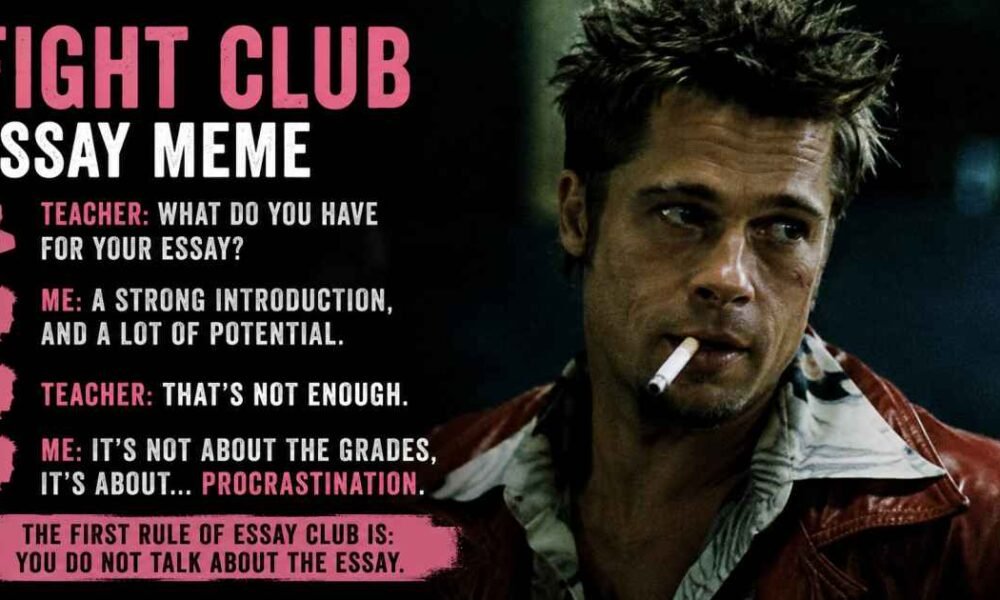
    There is a strange paradox at the heart of modern internet culture, and it is perfectly encapsulated by a single, ubiquitous image macro: a bruised Brad Pitt, a nervous Edward Norton, and the immortal, self-negating commandment: “The first rule of Fight Club is you do not talk about Fight Club.” The “Fight Club essay meme” represents a fascinating cultural phenomenon where the act of sharing a secret becomes the very engine of its propagation.

    The Viral Architecture of the First Rule of Fight Club Meme

    To understand why this image macro and its associated catchphrase represent a failure of cultural literacy, you have to look at the mechanics of how we communicate online today. Most people treat the reference as a simple shorthand for “don’t talk about this,” but that ignores the layered irony of the original text. In the story, the rule was never meant to be followed; it was a psychological trick.

    The digital version of this phenomenon functions as what cultural critics call a “simulacrum”—a copy of a copy where the original meaning has been completely bleached out. We use it to feel like we are part of something exclusive, even though the reference is understood by millions of people across every demographic. There is a particular irony in seeing this used by corporate brand accounts or mid-tier influencers—they are leveraging a story about the destruction of consumerism to boost their engagement metrics.

    The 19-Word Essay: A Viral Meta-Commentary

    Perhaps the purest expression of this cultural drift is the story of Allison Garrett, a student who, in 2019, wrote a 19-word “essay” on Fight Club that went viral and earned her a perfect score. The assignment was to write a movie review. Alli wrote: “The first rule of Fight Club is: you do not talk about Fight Club.” After a series of empty lines that took up the whole page, she concluded with, “That’s it. That’s the essay.” Her professor, displaying a remarkable sense of humor, gave her 100/100, commenting, “I struggled over this grade for a long time. I finally decided you get a grade for a laugh and how relevant your review is for this particular movie”.

    The viral response to this “essay” is a meta-commentary on the meme itself. On one level, the student demonstrated a deep understanding of the film’s most famous rule by refusing to break it. On another level, the internet’s celebration of her “cheat” reinforces the very irony the film critiques—we reward cleverness and surface-level engagement while ignoring the deeper, more uncomfortable questions the movie asks. The professor’s warning, “Do not try this kind of thing with other professors; they may not have my sense of humor,” highlights the reliance on a shared cultural shorthand that has lost its subversive edge.

    Why We Get the Joke Wrong (And Why It Matters)

    Skeptics will argue that it is just a bit of fun, that memes do not need to carry the weight of their source material’s philosophical baggage. They will say that the Fight Club meme is just a useful linguistic tool for acknowledging a taboo without actually breaking it. But that defense falls apart when you look at how the phrase is actually deployed in the wild. It is rarely used to protect something truly subversive. Instead, it is used to gatekeep mainstream hobbies or to add a thin veneer of “cool” to mundane activities. When a group of crypto enthusiasts, gym rats, or marketing professionals use the phrase, they aren’t fighting the system; they are trying to convince themselves that their hobby makes them dangerous or special.

    The power of the original story lay in its raw, uncomfortable look at masculine identity and the vacuum left by a society that prioritizes comfort over purpose. By reducing that complex narrative to a three-second joke, we have sanitized the very thing that made it potent. The meme does not challenge anything; it does not make anyone uncomfortable. It is a security blanket for people who want to feel like rebels without actually taking any risks. As one cultural critic noted, “If you’re using a quote from a movie owned by a multi-billion dollar conglomerate to post on a platform owned by a different multi-billion dollar conglomerate, you aren’t in a fight club. You’re in a focus group”.

    The Commodification of the Underground: From Subversion to Branding

    The most damaging aspect of this cultural drift is how it has trained us to view subversion as a pose rather than an action. In the late nineties, the story felt like a genuine, if violent, critique of how capitalism drains the soul. It was messy, contradictory, and deeply cynical about the possibility of escape. Today, that cynicism has been replaced by a comfortable irony. We don’t want to blow up the system; we just want to post about it in a way that gets us more followers. This shift is visible in how the first rule of Fight Club meme is used in professional settings or high-end marketing. It has been tooth-stripped and declawed until it is as threatening as a “Live, Laugh, Love” sign.

    This is the ultimate irony: the story that warned us against becoming mindless consumers of meaningless products has become a product itself. We have taken a story about the dangers of groupthink and turned it into a tool for groupthink. We are participating in the flattening of our own culture, choosing the easy, recognizable reference over difficult, original thought. As The Atlantic observed on the film’s 25th anniversary, “Fight Club’s insights about the consequences of men rallying around resentment remain apt today,” but the modern manosphere has completely co-opted and misread the film’s satire. The first rule of Fight Club meme has been stripped of its satirical intent and repurposed as a badge of honor for those who see Tyler Durden as a hero rather than a cautionary tale.

    Dismantling the Irony: The Meme as a Mirror

    There will always be those who claim that we are overthinking it, that a meme is just a meme, and that searching for deep philosophical rot in a picture of a sweaty Brad Pitt is an exercise in futility. But images and phrases are the building blocks of our shared reality. How we use them matters. When we take a story about the dangers of groupthink and turn it into a tool for groupthink, we are doing more than just making a harmless joke—we are participating in the flattening of our own culture.

    The survival of this particular cultural reference is not a testament to the movie’s lasting relevance, but rather a testament to our inability to move past it. We are stuck in a loop, repeating the same lines and laughing at the same jokes because we are afraid of what comes next. We are afraid of a world where we cannot define ourselves through the media we consume. So we cling to these old relics, polishing them until they are smooth and useless, pretending that we are still the rebels we once imagined ourselves to be.

    If you really want to honor the spirit of the source material, you shouldn’t post the meme. You should delete the app. You should go outside and do something that cannot be captured in a 1080p rectangle. You should engage in an act that has no potential for “engagement.” The moment you hit “post,” you have already lost the fight. You have submitted to the system that turns every radical thought into a clickable piece of content. You have become a cog in the machine that Tyler Durden wanted to break. The tragedy isn’t that we broke the first rule; it’s that we forgot why the rule was there to begin with. We think we’re the ones in the basement, but we are actually the ones sitting in the theater, watching the movie and waiting for someone to tell us what to think next.

    Conclusion: The Silence We Can’t Keep

    The “Fight Club essay meme” is a perfect representation of our current cultural moment: a paradox where we speak endlessly about our desire for silence, authenticity, and rebellion, but our only language for expressing this is the very medium of noise, performance, and conformity. We have turned the struggle for identity into a template, the rejection of consumerism into a brand, and the silence of the fight club into a roar of digital noise that says absolutely nothing. The joke, it turns out, is on us. We are a generation so steeped in irony that we have forgotten how to be sincere, so addicted to the algorithm that we have lost the ability to keep a secret. In a world that demands we broadcast every thought and feeling for the sake of engagement, true silence is the only rule we seem incapable of following. We are not defying the system; we are the system, desperately trying to convince ourselves that we are the exception. And in that failure to keep quiet, we prove exactly how loud and empty our rebellion has become.

    Frequently Asked Questions (FAQ)

    What is the “Fight Club essay meme”?

    The “Fight Club essay meme” refers to the viral phenomenon where students or internet users reference the film’s famous first rule—”The first rule of Fight Club is you do not talk about Fight Club”—in lieu of writing a substantial essay or commentary. The most famous example is Allison Garrett’s 19-word essay that earned a perfect score, which became a viral sensation on social media.

    Why is the first rule of Fight Club so popular as a meme?

    The rule is popular because it is a paradox: by stating you cannot talk about Fight Club, you are inherently breaking the rule. This self-negating quality makes it perfect for memes, where sharing the “secret” becomes a way to signal belonging to a cultural in-group. However, the joke has largely lost its original subversive meaning, becoming a hollow shorthand for secrecy rather than a critique of groupthink and consumerism.

    Did the student really get an A for a 19-word essay?

    Yes. In 2019, student Alli Garrett wrote a 19-word review of Fight Club for a college assignment. Her essay simply stated the first rule, left a blank space, and concluded with “That’s it. That’s the essay.” Her professor gave her a perfect score, citing the humor and relevance of her response to the movie, while warning other students not to try the same trick with less understanding professors.

    What is the deeper meaning behind the “Fight Club” meme?

    At a deeper level, the meme reflects a failure of cultural literacy. The film was a satire about toxic masculinity, consumerism, and the dangers of groupthink. By reducing it to a catchphrase, we have sanitized its uncomfortable critique and turned rebellion into a pose. The meme is a form of “performative rebellion” that reinforces the very conformity the film mocked—we are consumers of rebellion, not participants in it.

    Why do people misunderstand “Fight Club” so often?

    The film’s aggressive aesthetics and Brad Pitt’s charismatic performance make it easy to idolize Tyler Durden as a hero rather than a villain. This has led to the film being adopted by communities in the manosphere, who see it as a handbook for reclaiming masculinity, despite it being a satire written by a gay author about the destructive nature of such ideologies. The cultural misunderstanding is so prevalent that many universities and critics have noted the film’s legacy is often at odds with its actual message.

    How does the “Fight Club” meme relate to modern internet culture?

    The meme is a quintessential example of how internet culture strips complex ideas of their meaning for easy consumption. It functions as a “digital handshake”—a way to signal media literacy without actual understanding. In the age of algorithms and engagement, the meme persists because it is easy to replicate, offers a sense of identity, and reinforces an “us versus them” dynamic, even though the reference is understood by millions and is far from exclusive.

  • The Complete Guide to the pitbull docksin mix: A Comprehensive Breed Overview

    The Complete Guide to the pitbull docksin mix: A Comprehensive Breed Overview

    The Complete Guide to the Pitbull Dachshund Mix: A Comprehensive Breed Overview

    The world of designer dog breeds has brought forth many unique and fascinating combinations, but few are as intriguing as the pitbull docksin mix. Known by names such as the Doxie-Pit, Doxie-Bull, or Dox-Bull, this hybrid breed represents an unusual pairing of two highly distinct and beloved canine lineages: the robust and muscular American Pit Bull Terrier and the long-bodied, spirited Dachshund . This article provides an exhaustive exploration of this rare and captivating crossbreed, delving into every facet of its nature, care requirements, and the unique challenges and rewards of ownership.

    The Pitbull Dachshund mix is not a dog for the faint of heart. The combination of the Pit Bull’s strength and tenacity with the Dachshund’s independent and stubborn streak creates a pet that is both deeply affectionate and remarkably driven. This is a dog for an experienced owner who understands the nuances of canine behavior and is prepared to invest the time and effort required for proper socialization and training. For those ready to meet the challenge, the Doxie-Pit offers a companionship that is as rewarding as it is complex. It is a breed that demands respect, patience, and a firm but loving hand.

    This guide will serve as your definitive resource for understanding this remarkable hybrid. We will explore the distinctive temperament that defines the Doxie-Pit, examine its physical characteristics, and provide comprehensive guidance on training, health, and daily care. Whether you are considering welcoming one of these unique dogs into your home or simply wish to learn more about this fascinating mix, this article will equip you with the knowledge necessary to appreciate the depth of character and responsibility that comes with the Pitbull Dachshund mix.

    Decoding the Doxie-Pit: Understanding the Pitbull Dachshund Mix Temperament

    One of the most critical aspects of understanding the Pitbull Dachshund mix is to appreciate the profound influence of its parent breeds. The American Pit Bull Terrier is renowned for its high intelligence, loyalty, and an almost boundless drive to please its owners. However, it is also a breed with a strong will and a powerful protective instinct . Conversely, the Dachshund, originally bred for hunting badgers, is a dog of immense courage, independence, and a famously stubborn nature. When these two distinct personalities converge in a single dog, the result is a complex animal that is “highly intelligent and driven,” as noted by Wag Pet Boutique, but also “committed and highly affectionate” . This mix creates a dog that is both a devoted family member and a tenacious, independent thinker.

    Therefore, the temperament of the Pitbull Dachshund mix is often described as a paradox: a dog that is simultaneously an affectionate lapdog and a determined, high-energy companion. They are known to be “up for any fun activity” , reflecting the active nature of both parent breeds. However, their intelligence comes with a stubborn streak, which can manifest as a challenge during training sessions if not approached correctly. This is not a breed that responds well to harsh methods; instead, they require consistency, patience, and positive reinforcement to channel their drive constructively. This mix is a testament to the idea that while you can mix a “bully” breed with a “badger hunter,” you cannot dilute the powerful, working-class spirit of either.

    The Doxie-Pit’s protective and loyal nature can make it an excellent watchdog. However, without proper and early socialization, this protective instinct can lead to wariness of strangers and potential aggression toward other animals . This is especially crucial because both parent breeds have a history of being used for work that required a high degree of drive and, in the case of the Pit Bull, a tenacity that can be misinterpreted as aggression. For this reason, the Pitbull Dachshund mix is unequivocally “not a dog for the novice owner” . A responsible owner must be able to provide the firm, consistent leadership and structured environment necessary to help this intelligent and driven dog thrive as a balanced family member.

    Appearance and Physical Attributes of the Pitbull Dachshund Mix

    Predicting the exact physical appearance of a Pitbull Dachshund mix can be a challenge due to the significant disparity between its parent breeds. The American Pit Bull Terrier is a medium-sized, muscular dog with a broad head and strong jaw, while the Dachshund is a small, elongated breed with short legs and a distinctive, elongated torso. The result of this pairing can vary widely, even within the same litter. Some Doxie-Pits may inherit the robust, muscular frame and broad head of the Pit Bull, while others may lean more towards the Dachshund’s signature body shape and shorter stature. However, it is generally accepted that this mix will be a medium-sized dog that is surprisingly sturdy and compact, reflecting the best of both worlds.

    The coat of the Pitbull Dachshund mix is another area where the genetic influence of both parents can be seen. Both parent breeds boast short, smooth coats that are relatively low-maintenance. Consequently, the Doxie-Pit typically inherits this trait, resulting in a short, sleek coat that comes in a variety of colors. You may see a full range of patterns and hues, from classic solid colors to brindle, piebald, or dapple, reflecting the Dachshund’s diverse color palette. This short coat is one of the breed’s advantages, as it requires minimal grooming compared to breeds with longer or double coats. A simple weekly brushing is often sufficient to keep the coat healthy and minimize shedding.

    The overall appearance of a Pitbull Dachshund mix is often quite striking, combining the powerful, confident presence of a Pit Bull with the unique, quirky charm of a Dachshund. Regardless of which parent they take after more strongly, these dogs are generally characterized by a sturdy, well-muscled body and a sharp, alert expression. This distinct combination of traits makes the Doxie-Pit a highly individual-looking dog that often turns heads and sparks conversations. Their physical presence is a constant reminder of the unique blend of genetics that defines this rare and fascinating hybrid breed.

    Essential Care and Training for Your Pitbull Dachshund Mix

    The care and training of a Pitbull Dachshund mix demands a significant commitment of time, energy, and patience. As a breed that is both highly intelligent and stubborn, they respond best to a structured training regimen based on positive reinforcement. This is a dog that needs to understand its place in the household hierarchy. A leader who is calm, consistent, and firm will earn the dog’s respect and cooperation. Training should begin early and be a lifelong process, focusing on obedience, impulse control, and socialization from puppyhood to ensure the dog grows into a well-adjusted adult. The Doxie-Pit is not a dog that will simply learn on its own; it requires an owner who is as driven as they are to see the process through.

    The high energy levels of the Pitbull Dachshund mix mean that exercise is a critical component of daily care. These are not dogs suited for a sedentary lifestyle; they require regular, vigorous activity to channel their physical and mental energy productively. A tired dog is a well-behaved dog, and for a Doxie-Pit, this often means a combination of brisk walks, runs, and interactive playtime that engages their sharp minds . Without adequate exercise and mental stimulation, the Doxie-Pit’s intelligence can turn to destructive behaviors. Activities like puzzle toys, scent work, and agility training can be excellent outlets for their natural drive. This daily exercise regimen is crucial for their physical health and mental well-being.

    In terms of general care, the Pitbull Dachshund mix is relatively low-maintenance. Its short coat is easy to care for, requiring only weekly brushing to remove dead hair and keep its skin and coat healthy. This is a significant advantage for owners who do not want to spend hours on grooming. Other routine care includes regular teeth brushing, ear cleaning, and nail trimming to prevent common issues. Health-wise, this hybrid may be prone to conditions inherited from its parent breeds, including joint issues like hip dysplasia, skin sensitivities, and certain heart conditions . Therefore, it is advisable for owners to be aware of these potential health concerns and to work closely with a veterinarian to ensure their dog leads a long, healthy life, which typically ranges from 8 to 12 years .

    Conclusion

    The pitbull docksin mix, or Doxie-Pit, is a testament to the fascinating diversity within the canine world. It is a breed that combines the loyalty, intelligence, and strength of the American Pit Bull Terrier with the courage, independence, and distinctive charm of the Dachshund. The result is a dog that is deeply affectionate and devoted to its family, yet possesses a strong will and a driven nature that requires a dedicated and experienced owner. This is not a breed for everyone, but for the right person, the Doxie-Pit can be an exceptionally rewarding companion, offering a lifetime of loyalty, intelligence, and spirited companionship.

    However, potential owners must approach this breed with a realistic understanding of the commitment involved. The Pitbull Dachshund mix needs a home where it will receive consistent, positive training, ample daily exercise, and early, ongoing socialization to ensure it develops into a well-balanced adult. They are high-energy dogs that thrive on activity and mental stimulation, and they require a leader who can provide structure and guidance with patience and a firm yet loving hand. The Doxie-Pit’s unique blend of characteristics makes it a handful, but it also makes it an unforgettable and deeply loving member of the family.

    Ultimately, the Pitbull Dachshund mix is a diamond in the rough for the experienced dog owner who is ready to embrace its unique challenges and celebrate its many virtues. Its rarity only adds to its allure, but its true value lies in the profound bond it forms with its owner. If you are prepared to invest the time and effort required, the Doxie-Pit will reward you with a level of devotion and companionship that few other breeds can match. It stands as a compelling example of how two vastly different breeds can come together to create a truly extraordinary dog.

    Frequently Asked Questions (FAQ) about the Pitbull Dachshund Mix

    1. What are the common names for the Pitbull Dachshund mix?

    The Pitbull Dachshund mix is commonly referred to as the Doxie-Pit, Doxie-Bull, or Dox-Bull . These names help to distinguish this specific hybrid from other Pitbull mixes.

    2. Is the Pitbull Dachshund mix a good family dog?

    This mix can be a good family dog, but it is better suited for families with older children due to its high energy and strong prey drive . Like all dogs, they require proper socialization and supervision around children to ensure safe interactions.

    3. How much exercise does a Pitbull Dachshund mix need?

    The Pitbull Dachshund mix is a high-energy dog that requires a significant amount of daily exercise to stay happy and healthy. This includes long walks, runs, and active playtime to meet their physical and mental needs .

    4. What is the lifespan of a Pitbull Dachshund mix?

    The typical lifespan for a Pitbull Dachshund mix is between 8 to 12 years . Providing a healthy diet, regular exercise, and routine veterinary care can help maximize their lifespan.

    5. Is the Pitbull Dachshund mix easy to train?

    This hybrid is highly intelligent, but it can be stubborn and difficult to train, especially for novice owners. They require a firm, consistent, and patient trainer who uses positive reinforcement methods .

    6. What are the grooming requirements for a Pitbull Dachshund mix?

    The Pitbull Dachshund mix has a short, low-maintenance coat that requires minimal grooming. Weekly brushing is typically sufficient to manage shedding and keep the coat looking its best .

  • The Alpha Wolf Meme: Decoding the Internet’s Howl for Dominance, Loneliness, and Ironic Self-Awareness

    The Alpha Wolf Meme: Decoding the Internet’s Howl for Dominance, Loneliness, and Ironic Self-Awareness

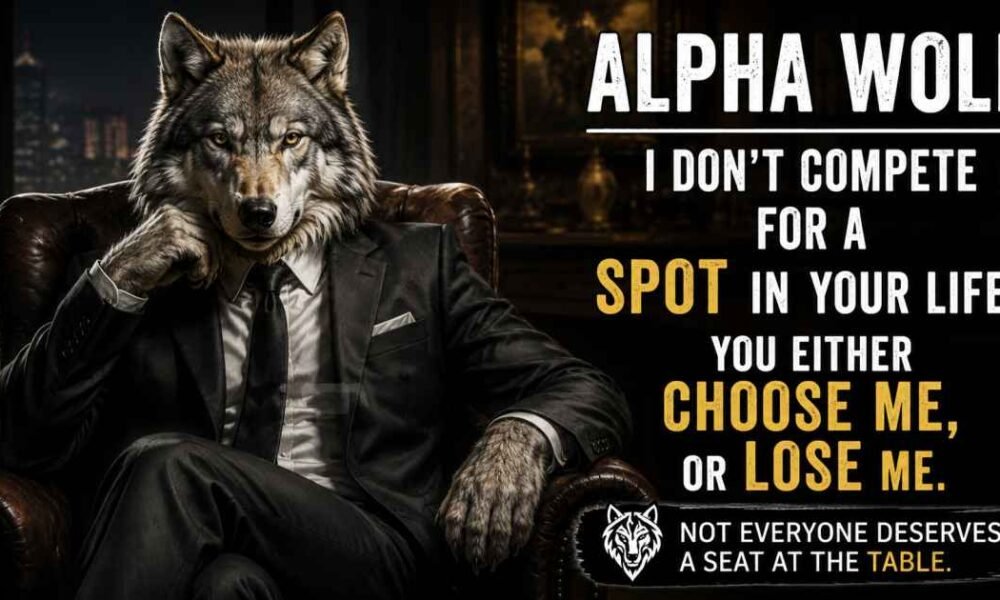
    In the vast, ever-shifting landscape of internet culture, few images have captured the collective imagination of Gen Z quite like the “Alpha Wolf Meme.” The meme, often featuring a solitary wolf gazing pensively into a turbulent horizon or standing stoically against a dramatic moonlit backdrop, has become a ubiquitous presence across platforms like TikTok, Instagram, and X (formerly Twitter). With the hashtag #AlphaWolf accumulating over 900 million views on TikTok alone, its reach is undeniable. However, the meme’s true power lies not just in its popularity, but in the rich tapestry of meanings it has woven, ranging from an ironic celebration of individuality to a potentially troubling glorification of isolation and a misunderstanding of nature itself. To truly understand the “Alpha Wolf” meme is to decode a digital artifact that functions as both a mirror and a magnifying glass for the triumphs and tribulations of a digitally-native generation navigating an increasingly complex and often lonely world. While on the surface, it serves as a humorous and relatable way to express confidence and leadership, a deeper analysis reveals a stark reminder of the loneliness epidemic gripping modern culture, as well as a sharp, ironic self-awareness that defines Gen Z’s unique approach to humor.

    The Visual Genesis and Rise of the Meme

    The visual identity of the alpha wolf meme is almost as important as its meaning. The vast majority of the iconic images used in the meme can be traced back to a single artist, known on DeviantArt as WolfRoad. Since the early 2010s, this pseudonymous illustrator has been posting detailed, often melancholic, pictures of anthropomorphic wolves in nature. One of the most widely used images is titled “Voices,” depicting an intricately drawn human-like wolf sitting beside a tree, staring thoughtfully off into the distance. These drawings, which predate the meme’s current viral status, became the perfect raw material for internet users to overlay with text, creating a stark contrast between the serious, almost operatic visual and the often humorous or cringe-inducing captions. An early hub for this activity was the Spanish-language Facebook group “Sentimientos De Un Lobo Solitario” (Feelings of a Lone Wolf), which, starting in 2015, became a repository for these images paired with inspirational, or “Minions-core,” quotes.

    The transition from a niche Facebook group to a global meme phenomenon was propelled by the rise of short-form video content. In 2021, TikTok creators began using an augmented reality filter called the “Alpha Werewolf Transformation” to create videos where they would dramatically transform into wolf-like creatures. The original creator of this trend, @willuzi, set the blueprint by making his transformation videos intentionally cringe, thereby establishing the ironic tone that would come to define much of the alpha wolf meme’s humor. The trend exploded, with users and even major brands like Axe, Drumstick, and the PGA Tour joining in, creating their own comedic takes on the “alpha wolf” transformation. This commercialization, however, was met with mixed reactions, with some arguing that it sapped the fun and irony out of the meme, a classic pattern in the lifecycle of viral internet content. Nevertheless, the visual of the lone, stoic wolf had been firmly cemented in the digital consciousness.

    The Core Concepts: Alpha and Sigma Archetypes

    Understanding the alpha wolf meme requires an exploration of the social hierarchies it satirizes and perpetuates. The term “alpha” itself is rooted in outdated zoological studies from the mid-20th century that suggested wolf packs are led by a dominant male who fights his way to the top. As wildlife biologists have since discovered, this is a flawed model based on observations of unrelated captive wolves in unnatural conditions. In the wild, a wolf pack is typically a family unit led by the parents, who are not “alphas” in the aggressive sense of the word, but simply the breeding pair. Despite being scientifically debunked, the cultural archetype of the “alpha male”—a figure of dominance, aggression, and leadership—persists strongly, and the meme serves as a direct, if often ironic, homage to this concept.

    More recently, the meme has become intertwined with the concept of the “sigma male,” a figure who is described as a “lone wolf,” operating outside of the conventional alpha/beta social hierarchy. This archetype resonates deeply with those who feel like outsiders or who reject traditional societal structures. The sigma male is often portrayed as an enigmatic, self-reliant, and intellectually superior individual who doesn’t need external validation. For many, the alpha wolf meme, especially when used in a more serious and less ironic context, becomes a visual shorthand for this sigma identity—celebrating solitude as a noble and powerful state of being. However, this association has a problematic side. Some men’s groups have co-opted the imagery to promote philosophies of hyper-individualism and isolation, with figures like Patrick Bateman from “American Psycho” being wrongly held up as a “sigma” role model. This darker underbelly shows how the meme’s celebration of independence can morph into an endorsement of social anomie and toxic masculinity.

    The Irony and the Loneliness Epidemic

    Perhaps the most fascinating aspect of the alpha wolf meme is its duality; it functions simultaneously as a genuine expression of loneliness and a sharp, ironic commentary on it. Gen Z, having come of age during a global pandemic that stunted social development and exacerbated feelings of isolation, has made the “lone wolf” a poster child for its collective experience of loneliness. The meme allows young people to express these difficult feelings of being misunderstood and alone in a way that is both relatable and disarming. By pairing dramatic imagery of a howling wolf with cringey audio or an absurdly serious caption, creators craft a “melodramatic tribute” where they pretend to be “howling through the pain”. This fusion of sincerity and satire is a hallmark of Gen Z humor, which often uses self-deprecation and surrealism to grapple with existential angst and societal pressures.

    This act of sharing and creating these memes has an unintended but powerful consequence: it fosters community among people who feel isolated. By publicly declaring their status as a “lone wolf,” individuals signal their struggles to a peer group that understands and shares them, creating a sense of camaraderie. As one analysis notes, “What began as a celebration of solitude has evolved into a unifying force”. In this sense, the meme is a societal paradox; it elevates the image of the solitary figure, but the very act of its creation and consumption is a communal experience, an ironic rebuke to the loneliness it depicts. It reflects a culture that, while digitally hyper-connected, is experiencing record levels of isolation, normalizing and even romanticizing a state of being that can be deeply harmful.

    Deconstructing the Myth: A Call for Connection

    The widespread popularity of the alpha wolf meme and its underlying concepts presents a valuable opportunity to deconstruct the myth of the “lone wolf” and promote healthier ideals of strength and leadership. The original, debunked scientific concept of the “alpha wolf” perpetuates harmful ideas about leadership, suggesting that dominance and aggression are superior or impressive qualities. In reality, successful wolf packs, and by extension, successful human communities, are built on cooperation, connection, and parental care. The zoological truth is that “kindness in cooperation and connection is how we are recognized”—a far cry from the meme’s glorification of the stoic, dominant individual.

    By critically examining the meme, we can challenge the stereotypes it reinforces and encourage a shift in perspective. The glorification of isolation as a noble state is a concerning cultural trend that can exacerbate mental health struggles and lead to a society that values individualism over community. Instead of celebrating the “lone wolf,” there is a growing need to champion the “pack”—the value of building strong, supportive relationships and fostering a sense of belonging. While the meme is often used ironically, its underlying themes can still influence how young people perceive strength and success. Recognizing the absurdity and the problematic aspects of the alpha wolf trope is the first step towards redefining what true leadership and personal strength look like, moving away from outdated and harmful myths and towards a more connected and compassionate reality.

    Conclusion

    The alpha wolf meme is far more than just a fleeting internet trend; it is a multifaceted cultural artifact that encapsulates the anxieties, humor, and contradictions of an entire generation. Its visual origins in the striking art of WolfRoad provided the perfect canvas for a digital conversation about dominance, hierarchy, and the human condition. The meme’s connection to the sigma male archetype highlights its appeal to those who feel like outsiders, while the intense popularity of its ironic and often cringe-worthy iterations reveals a generation’s unique way of coping with profound loneliness. The debunked science of the “alpha wolf” serves as a powerful metaphor for outdated and harmful ideals of masculinity and leadership, while the meme’s role in fostering communities is a testament to the power of shared digital experiences. Ultimately, the true “alpha wolf” may not be the one standing alone on the cliffside, but the one who understands the strength in the pack and the importance of real-world connection. The meme, in all its complexity, is a howl into the digital void, a call for recognition, community, and a better understanding of ourselves.

    Frequently Asked Questions (FAQ)

    Q1: What exactly is the “Alpha Wolf” meme?
    >>>>>>>>>A: The Alpha Wolf meme is an internet phenomenon that uses images of a lone, majestic wolf, often in a pensive or dramatic pose, to symbolize strength, independence, and leadership. It is used both ironically (to mock extreme confidence or “main character” energy) and sincerely (to express feelings of isolation or self-reliance)“”>.

    Q2: Where did the iconic images for the meme come from?
    >>>>>>A: The majority of the most popular images used in the alpha wolf meme are the work of DeviantArt user WolfRoad, who has been posting detailed drawings of wolves for over a decadeass=””>. The image “Voices” is one of the most commonly used templates.

    Q3: What is the “sigma male” and how does it relate to the meme?
    >>>>>>A: The “sigma male” is an internet archetype that describes a man who is a “lone wolf,” operating outside of the traditional social hierarchy (like alphas and betas). He is portrayed as self-reliant, enigmatic, and independent. The alpha wolf meme is often used as a visual shorthand for this sigma identity, especially in communities that celebrate this type of individualism<span class=””>.

    Q4: Is the “alpha wolf” concept scientifically accurate?
    A: No, the concept of the “alpha wolf” is based on outdated and flawed research on captive wolves. In the wild, wolf packs are typically family units led by the parent wolves, not through aggressive dominance battles. The scientific community has since debunked this myth.

    Q5: Why is the meme so popular with Gen Z?
    >>>>>>A: The meme resonates with Gen Z because it humorously and ironically addresses feelings of loneliness and isolation that are common in a digitally connected yet socially distanced world. It allows for self-deprecating humor and fosters a sense of community among those who share these feelings.

  • The Art and Science of Racing Commentary: How to Captivate Audiences and Master Live Sports Broadcasting

    The Art and Science of Racing Commentary: How to Captivate Audiences and Master Live Sports Broadcasting

    The roar of engines, the thunder of hooves, the blur of speed—racing is a spectacle of human and mechanical极限, but without the voice that brings it to life, it remains merely motion. Racing commentary is the linguistic thread that weaves chaos into narrative, transforming a chaotic stream of movement into a compelling story of triumph, tragedy, and human endeavor. This article explores the intricate craft of racing commentary, examining its techniques, its evolution, and why it remains one of the most distinctive and demanding forms of live broadcasting in the world . Whether you are an aspiring commentator, a motorsport enthusiast, or a content creator seeking to rank on Google, understanding the mechanics of this unique profession is essential. As we delve into the various facets of this exciting field, we will address the critical question: what makes racing commentary not just informative, but truly unforgettable?

    The Structure of Live Commentary: From Grid to Checkered Flag

    To the untrained ear, racing commentary might sound like a spontaneous eruption of excitement, but in reality, it follows a highly structured and strategic framework designed to guide the audience through the event. The commentator is not just a spectator with a microphone; they are a narrator who must manage the flow of information in real-time .

    The commentary itself is typically divided into two primary forms: “play-by-play” narration and “color” commentary. Play-by-play is the backbone of the broadcast, providing a moment-by-moment account of the action in the present tense—a linguistic feature that distinguishes it from other forms of storytelling .

    The Linguistics of Speed: How Commentators Create Drama with Words

    The power of racing commentary lies not only in what is said but in how it is said. The language used is a specialized discourse, characterized by a fascinating blend of technical precision and dramatic narrative. A study on motorsport commentary during the 2024 Kenya Safari Rally revealed that commentary is marked by a high lexical density (around 78%), ensuring technical accuracy, while simultaneously employing vivid metaphors to inject emotion into the broadcast . This linguistic duality is crucial; the commentator must explain complex mechanical failures or aerodynamic strategies to the knowledgeable fan while keeping the casual viewer on the edge of their seat.

    This is achieved through specific narrative devices. Metaphors, particularly those drawn from the animal kingdom or combative language, are frequently used to describe the aggression and speed of drivers—a driver may “hunt down” the leader or “defend” their position with “ferocity” . Furthermore, the syntax of commentary is dynamic, shifting with the intensity of the race. In moments of high action, commentators often resort to short, sharp exclamations and simplified syntax to mirror the urgency of the moment: “Spinning! He has gone off the track!” Conversely, during strategic lulls, they employ complex subordinate structures to analyze unfolding tactics . This dynamic use of language, combined with the distinct suprasegmental features of speech—pitch, intonation, and stress—transforms the voice of the commentator into the primary instrument of tension and release, defining the audience’s emotional experience of the race .

    The Challenges of the Booth: Preparing for the Unpredictable

    While the performance appears seamless, the environment in which a racing commentator works is notoriously challenging and fraught with potential pitfalls. The commentary booth is often a cramped space, high above the track, with the commentator’s view of the live action obscured by television monitors and timing screens . This forces the commentator to focus intently on the broadcast feed, just like the viewer at home, while simultaneously processing a flood of external data. To combat the inherent chaos and maintain composure, professionals like former F1 commentator Ben Edwards emphasize rigorous physical and mental preparation. This includes a strict pre-race routine, such as avoiding heavy meals, performing voice warm-ups, and standing while commentating to provide the necessary breath and energy for key moments .

    However, even the best preparation cannot account for every variable. Technical failures, such as the loss of power to monitors in the middle of a race, require the commentator to rely purely on instinct and a deep knowledge of the sport. As Edwards reflected on a 1998 incident where he lost all visual feed, his experience highlights the need for resilience and self-critique; he noted, “Race didn’t go well for me… Didn’t feel on top of it” . This ability to handle the unpredictable, to dig deep and “create an energy that is not being stimulated by track action” , is what separates the amateur from the professional. It requires the commentator to have a treasure trove of stories and information ready to deploy, keeping the audience engaged even when the race itself is dull, turning potential disasters into a testament to their skill.

    Conclusion

    Racing commentary is a unique and powerful art form that sits at the intersection of journalism, performance, and linguistics. It is far more than a simple description of vehicles moving in circles; it is the structured, high-stakes narration of a live, unfolding drama. Through meticulous preparation, a deep understanding of linguistic techniques, and an unflappable demeanor in the face of chaos, the commentator serves as the audience’s guide, translator, and emotional conduit. From the strategic breakdown of a qualifying lap to the breathless exclamation at the checkered flag, the voice of the commentator is the heartbeat of the racing experience. It transforms raw speed into a story, creating a lasting narrative that resonates with fans long after the engine has cooled.

    Frequently Asked Questions (FAQ)

    1. What is the difference between “play-by-play” and “color” commentary in racing?
    Play-by-play commentary is the real-time, present-tense narration of the events happening on the track, keeping the audience updated on positions and immediate actions. Color commentary provides the analysis, background information, and interpretation of the events, adding depth and context to the broadcast .

    2. Why is the language used in racing commentary so unique?
    The language is unique because it must be both technically accurate and dramatically engaging. It often features a high lexical density for precision, uses vivid metaphors to create emotion, and employs dynamic syntactic structures that shift from short exclamations in moments of action to more complex sentences during analysis .

    3. What kind of preparation does a professional commentator do before a race?
    Professional commentators engage in extensive research, spending days updating statistics and facts about the drivers and track. They often create a personal document summarizing key talking points, study the circuit map and grid, and perform voice warm-ups. They also have a strict pre-race routine to manage their physical and mental state .

    4. How do commentators handle unexpected situations like technical failures?
    Handling unexpected situations relies heavily on the commentator’s deep knowledge of the sport and their ability to fall back on extensive notes and personal anecdotes. They must be able to maintain a seamless broadcast by drawing on their prepared material to fill the silence and keep the audience engaged, even when they cannot rely on their visual monitors .

    5. What are “discourse markers” and why are they important in commentary?
    Discourse markers are words or phrases like “suddenly,” “meanwhile,” or “look,” which are used to structure the narrative and create narrative coherence. They help signal changes in the action, introduce new topics, or build suspense, guiding the listener’s attention and making the commentary easier to follow .

  • Tunusa: A Comprehensive Guide to a Multifaceted Word

    Tunusa: A Comprehensive Guide to a Multifaceted Word

    Introduction

    The term “Tunusa“ may initially appear obscure, yet it serves as a fascinating linguistic and cultural gateway to diverse corners of the world. Far from a single definition, it is a word with multiple, distinct identities, each painting a unique picture of a place, people, or product. This article embarks on a journey to explore these different facets, peeling back the layers of meaning behind the term “Tunusa.” For one group of speakers, it is simply the name of a country. In other contexts, it refers to a cultural artifact, a community, or even an airline. This guide will break down the various meanings of “Tunusa,” providing a comprehensive resource for anyone who has encountered this intriguing word and wishes to understand its global significance.

    Geographic Identity: Tunisia in the Kotava Language

    In the realm of linguistics, “Tunusa” holds a very specific and official meaning: it is the Kotava word for the North African nation of Tunisia . Kotava is an international auxiliary language created to be simple and neutral, allowing speakers from different linguistic backgrounds to communicate. Within this constructed language, place names are often adapted, and “Tunusa” is the direct translation for the country. This usage is important because it highlights how “Tunusa” exists as a recognized geographic term in a specific linguistic framework. While it might not be a common way to refer to Tunisia in English or other major languages, its presence in Kotava demonstrates the word’s reach into niche linguistic communities, solidifying its status as a legitimate toponym.

    A Cultural Artifact: The Tunusa Headband of Papua New Guinea

    Taking a significant leap from North Africa to the Pacific, the term “Tunusa” takes on a completely different meaning as a tangible piece of cultural heritage. According to records from the British Museum, “Tunusa” is the name for a traditional forehead band used by people in the Eastern Highlands of Papua New Guinea . This is not a country but an object: a composite band made of small white shells attached to a vegetable fiber backing . Worn by men, women, and children, this headband is a clear example of how a word can be local and specific, tied to a particular community’s material culture. The fact that this piece is part of the British Museum’s collection highlights its anthropological importance and shows that for the Kafe people, “Tunusa” is a word that represents identity, adornment, and cultural tradition .

    A South African Community: The Tunusa Settlement

    Beyond a language and an artifact, “Tunusa” also exists as the name of a community and a place with a distinct socio-political history. In the Sebokeng area, south of Johannesburg, South Africa, lies a shanty town known as Tunusa . This settlement, which has existed since at least 1989, represents a more contemporary and challenging aspect of the word’s meaning . The residents of Tunusa have been documented protesting for service delivery, highlighting issues of infrastructure and the unfulfilled promises of housing . This application of the name “Tunusa” connects it directly to the social and political landscape of South Africa, reminding us that a word can represent not just a location, but the struggles and resilience of the people who live there.

    A Modern Brand: The TransNusa Airline

    In a shift to a modern, commercial context, “Tunusa” also appears as part of a brand name. TransNusa is an Indonesian airline that has recently undergone a significant rebranding, positioning itself as a “Premium Service Carrier” . This rebranding came after the airline was sold and restructured, expanding its operations from domestic routes to include international destinations like Singapore, Kuala Lumpur, and Guangzhou . The airline’s strategy focuses on providing comfort and flexibility, differentiating itself from other low-cost carriers with bundled services like food, baggage, and priority check-in . In this context, “Tunusa” (as part of TransNusa) is associated with modern travel, business, and economic recovery in Southeast Asia, a far cry from the headband in Papua New Guinea or the settlement in South Africa.

    Conclusion

    The journey to define “Tunusa” reveals a word that is remarkably rich and multifaceted. It is not a single concept but a collection of distinct identities that span the globe and defy simple categorization. From its formal use as the name for Tunisia in the constructed language Kotava, to its place as a treasured cultural artifact in Papua New Guinea, a symbol of community resilience in South Africa, and a modern airline brand in Indonesia, “Tunusa” demonstrates the incredible diversity of human language and experience . This exploration shows that when we encounter an unfamiliar word, we are often encountering a hidden history, a cultural practice, or a new perspective. The meanings of “Tunusa” are as diverse as the people and places it represents, serving as a testament to the interconnected and yet profoundly unique nature of our world.


    Frequently Asked Questions (FAQ)

    1. What is the most common meaning of the word “Tunusa”?

    There is no single “most common” meaning, as its usage is highly contextual. However, in linguistic databases, it is most formally recognized as the word for Tunisia in the Kotava international auxiliary language . For those searching in other contexts, it may refer to a cultural object, a place, or a brand name.

    2. Is “Tunusa” related to the tuna fish?

    No, the terms are not related in the contexts discussed. The word for the fish, “tuna,” comes from the Latin “thunnus,” which has Greek origins . “Tunusa” is a separate term with its own unique etymological and cultural roots, as demonstrated by its varied applications in different languages and cultures.

    3. Where is the Tunusa settlement located?

    The Tunusa settlement is located in the Sebokeng area, south of Johannesburg, South Africa . It is an informal settlement or shanty town that gained attention for protests regarding service delivery and housing issues .

    4. What is TransNusa?

    TransNusa is an Indonesian airline that has rebranded itself as a “Premium Service Carrier” . It originally started in 2005, suspended operations during the COVID-19 pandemic, and was relaunched in 2022 with a new business model. It now flies both domestic and international routes, including to Singapore, Malaysia, and China.

    5. Is the “Tunusa” headband a significant cultural item?

    Yes, the “Tunusa” forehead band from Papua New Guinea is a significant cultural object. It is documented in the British Museum’s collection and is described as a traditional piece of adornment worn by men, women, and children in the Kafe language community .

  • The Unrivalled Legacy of Ruby Walsh: A Tribute to Jump Racing’s Greatest

    The Unrivalled Legacy of Ruby Walsh: A Tribute to Jump Racing’s Greatest

    Introduction

    In the pantheon of National Hunt racing, few names command the same reverence and respect as Rupert “Ruby” Walsh. Born on May 14, 1979, in Kill, County Kildare, Ireland, Walsh emerged from a family steeped in racing tradition to become arguably the greatest jump jockey the sport has ever witnessed . With a career spanning 24 years, 2,756 winners, and a record 59 Cheltenham Festival victories, Walsh’s legacy transcends mere statistics; it represents the embodiment of tactical brilliance, raw courage, and an almost supernatural ability to read a race . His retirement on May 1, 2019, following a victory aboard Kemboy in the Punchestown Gold Cup, brought the curtain down on an era that redefined excellence in jump racing . This article explores the career of the man who became a living legend, examining the key partnerships, unparalleled achievements, and enduring legacy of Ruby Walsh, the rider who made the Cheltenham Festival his personal kingdom.

    The Early Years: A Dynasty in the Making

    Ruby Walsh was born into a world where horses were not just a business but a way of life. As the eldest son of Ted Walsh, an 11-time champion amateur jockey and successful trainer, and the brother of Katie Walsh, a top amateur rider, success in the saddle seemed almost predestined . His talent, however, was anything but inherited; it was earned through relentless dedication and a natural affinity for horses that became apparent from his teenage years. Walsh wasted no time in making his mark, winning the Irish amateur title twice, in the 1996/97 and 1997/98 seasons, while still a teenager . This early dominance foreshadowed a professional career that would see him crowned Irish National Hunt champion jockey a staggering 12 times, a record that speaks volumes about his consistency and sheer will to win . His first victory in 1995 on Siren Song, trained by his father, was merely the opening chapter of a story that would captivate the racing world for decades .

    The Aintree Grand National Glory

    While many jockeys spend their entire careers chasing a single Grand National victory, Walsh achieved the feat twice, with both wins coming on horses that were deeply personal to him. In 2000, at the tender age of 20, Walsh won the Grand National at his very first attempt, riding his father’s horse, Papillon . This was a fairy-tale victory that cemented his status as a rising star. The dream was reprised five years later when he won the race again, this time on Hedgehunter for his long-time ally, trainer Willie Mullins . Walsh’s association with the Grand National is a testament to his bravery and tactical intelligence; he is one of the few modern jockeys to have won the English, Irish, Welsh, and Scottish Nationals during his career . These victories were not just about winning for himself; they were a tribute to the family legacy and the deep-rooted connections that define the world of National Hunt racing.

    The Kauto Star Era: A Partnership for the Ages

    When discussing Ruby Walsh‘s career, it is impossible to overlook the immortal partnership with the great Kauto Star. This French-bred gelding and Walsh formed a bond that would produce some of the most memorable moments in modern racing. Together, they won two Cheltenham Gold Cups (2007 and 2009) and secured a record five King George VI Chases at Kempton Park . Their story is one of triumph, setback, and glorious redemption, particularly in 2009 when Kauto Star became the first horse to regain the Gold Cup, after being defeated by stablemate Denman the previous year . Walsh often described Kauto Star as the “horse of his lifetime,” a sentiment echoed by racing fans who witnessed their dominance . The trust between horse and rider was absolute; Walsh’s ability to settle Kauto Star perfectly in his races and deliver him at the exact right moment was a hallmark of his genius . In 2012, when Walsh pulled up Kauto Star in the Gold Cup to protect the horse, the crowd rose to applaud not just the horse, but the deep respect and partnership that Walsh had cultivated with his equine champion .

    The Cheltenham Festival Record: A Kingdom of His Own

    Ruby Walsh’s legacy is inextricably linked with the Cheltenham Festival, a meeting where he utterly dominated. He retired with an unprecedented 59 career wins at the festival, making him the winning-most jockey in its history . He was the leading jockey at the festival on 11 occasions, a record that underscores his status as the preeminent rider of his generation at the sport’s most prestigious event . The pinnacle of his festival career came in 2009 when he rode a record-breaking seven winners over the four days, a feat he matched again in 2016 . In 2017, he became the first jockey to ride four winners on a single day at the festival, showcasing his sheer dominance across all divisions of the sport . His winners include the Champion Hurdle on Hurricane Fly and Faugheen, the Queen Mother Champion Chase on Master Minded, and the Stayers’ Hurdle on the legendary Big Buck’s . At Cheltenham, the crowd often serenaded his returns to the winner’s enclosure with the Kaiser Chiefs’ hit “Ruby,” a fitting soundtrack for a rider who truly was one of a kind .

    The Unique Alliance with Willie Mullins and Paul Nicholls

    One of the most remarkable aspects of Walsh’s career was his unique riding arrangement with two of the sport’s greatest trainers. For much of his professional life, he acted as the go-to jockey for Willie Mullins in Ireland and Paul Nicholls in England . This arrangement was a testament to his immense skill and reputation, as both trainers trusted him to pilot their best horses on the biggest stages. With Nicholls, he enjoyed phenomenal success with horses like Kauto Star, Denman, and Master Minded; with Mullins, he was the driving force behind a dynastic period that included champions like Hurricane Fly, Annie Power, Faugheen, and Douvan . Tony McCoy, his great friend and rival, famously described Walsh as “the man who takes all the prize money,” a nod to the fact that Walsh was often on the best horses because he was the best jockey . This arrangement allowed Walsh to cherry-pick the top rides in both Ireland and Britain, enabling him to accumulate a win total that places him third in the all-time list behind only McCoy and Richard Johnson .

    Injury, Resilience, and Character

    The career of a jump jockey is fraught with danger, and Walsh’s story is also one of incredible resilience in the face of horrific injuries. He suffered a litany of broken bones, including broken legs, fractured wrists, dislocated hips, cracked vertebrae, and in a particularly gruesome incident in 2008, he had his spleen removed in an emergency operation following a fall at Cheltenham . Remarkably, he returned to the saddle just 27 days later to ride Kauto Star to victory in the King George VI Chase . He broke the same leg twice in quick succession towards the end of his career, yet he always fought his way back to the top . This resilience was not just physical; it was mental. He possessed an unshakeable belief in his own ability and the tactical acumen to win races from seemingly impossible positions. His decision to retire at the age of 40, after a Grade 1 victory at Punchestown, was a fitting end for a man who chose to bow out on his own terms, prioritizing his family—his wife Gillian and four daughters—over the adrenaline of the sport he loved .

    Conclusion

    Ruby Walsh is more than just a record-holder; he is the benchmark by which all future National Hunt jockeys will be measured. His career was a masterclass in the art of race riding, blending an ice-cold tactical mind with the raw courage required to ride horses over massive obstacles at breakneck speeds. From his early Grand National victories to his record-shattering exploits at the Cheltenham Festival, Walsh’s career was defined by his partnerships with equine legends like Kauto Star, Big Buck’s, and Hurricane Fly. His unique ability to command the loyalty of two champion trainers in different countries speaks to a level of trust and talent that is unlikely to be seen again. As he transitions into a career as a respected pundit, his legacy is secure: Ruby Walsh is, without question, the greatest rider the Cheltenham Festival has ever seen and one of the finest jockeys ever to grace the turf . He left the sport on a high note, at the top of his game, and in doing so, he cemented his status as a true sporting icon.

    Frequently Asked Questions (FAQ)

    Q: How many winners did Ruby Walsh ride in his career?
    A: Ruby Walsh rode a total of 2,756 winners during his 24-year career, including 1,980 in Ireland and 776 in Britain . This makes him the third most prolific winner in British and Irish jump racing history behind only Sir Anthony McCoy and Richard Johnson .

    Q: How many Cheltenham Festival winners did Ruby Walsh ride?
    A: Ruby Walsh is the winning-most jockey in the history of the Cheltenham Festival, with a record 59 winners . He also holds the record for being the leading jockey at the festival on 11 occasions .

    Q: What are the biggest races Ruby Walsh won?
    A: Walsh won almost every major race in National Hunt racing. His biggest victories include the Cheltenham Gold Cup (twice on Kauto Star), the Champion Hurdle (four times on Hurricane Fly, Faugheen, and Annie Power), the Queen Mother Champion Chase (three times), the Grand National (twice on Papillon and Hedgehunter), and the King George VI Chase (five times on Kauto Star) .

    Q: When and why did Ruby Walsh retire?
    A: Ruby Walsh retired on May 1, 2019, following his victory on Kemboy in the Grade 1 Punchestown Gold Cup . He announced his retirement immediately after the race, choosing to bow out on a high just two weeks before his 40th birthday, to spend more time with his wife and four daughters .

    Q: Is Ruby Walsh related to Katie Walsh?
    A: Yes, Ruby Walsh is the older brother of Katie Walsh, who is a former top amateur jockey . His father is the legendary trainer and former amateur jockey Ted Walsh .

    Q: What is Ruby Walsh doing now?
    A: Since retiring, Ruby Walsh has become a prominent racing pundit and commentator, regularly appearing on television for RTÉ and other broadcasters . He also contributes written analysis for various racing publications .